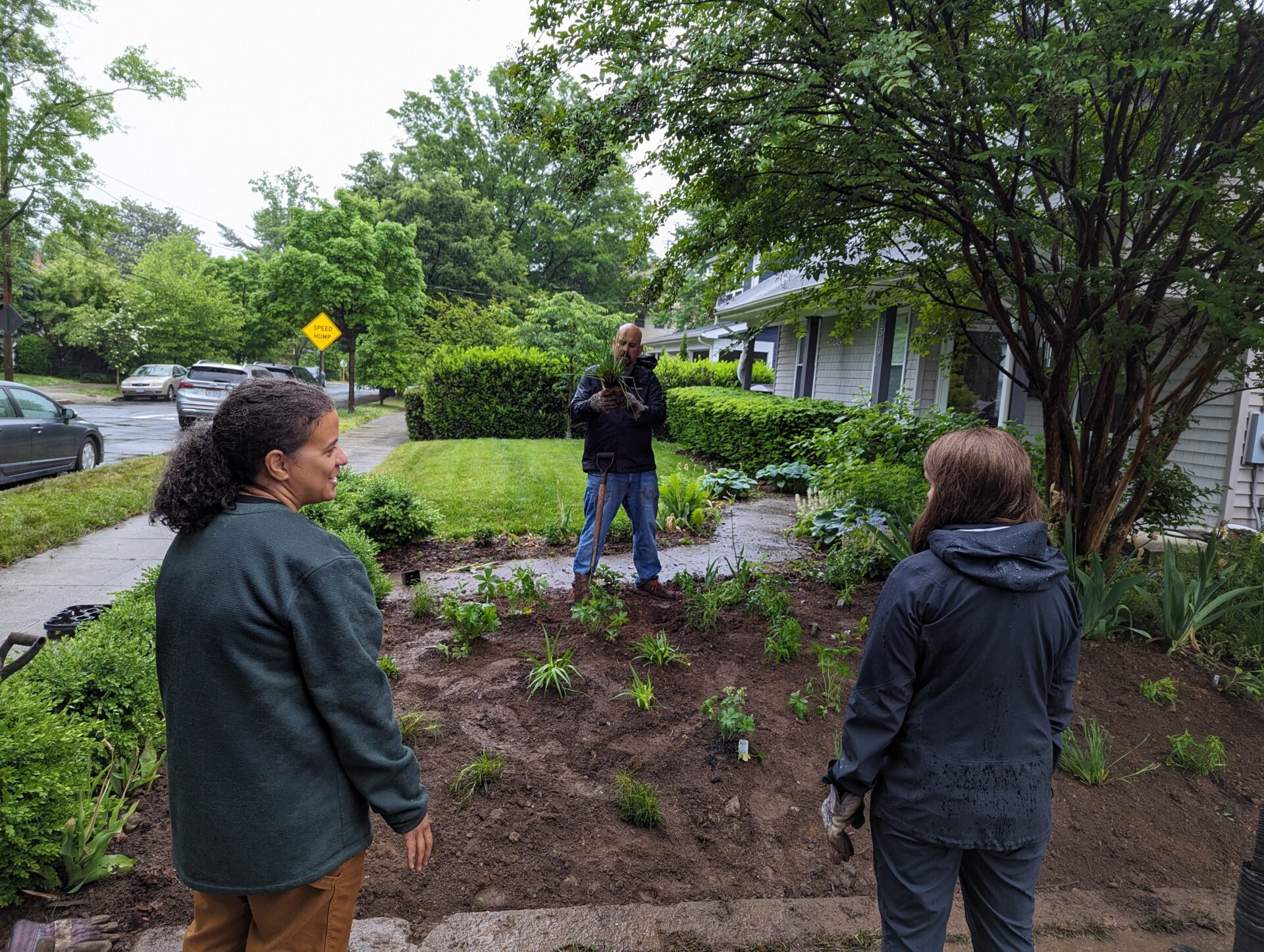
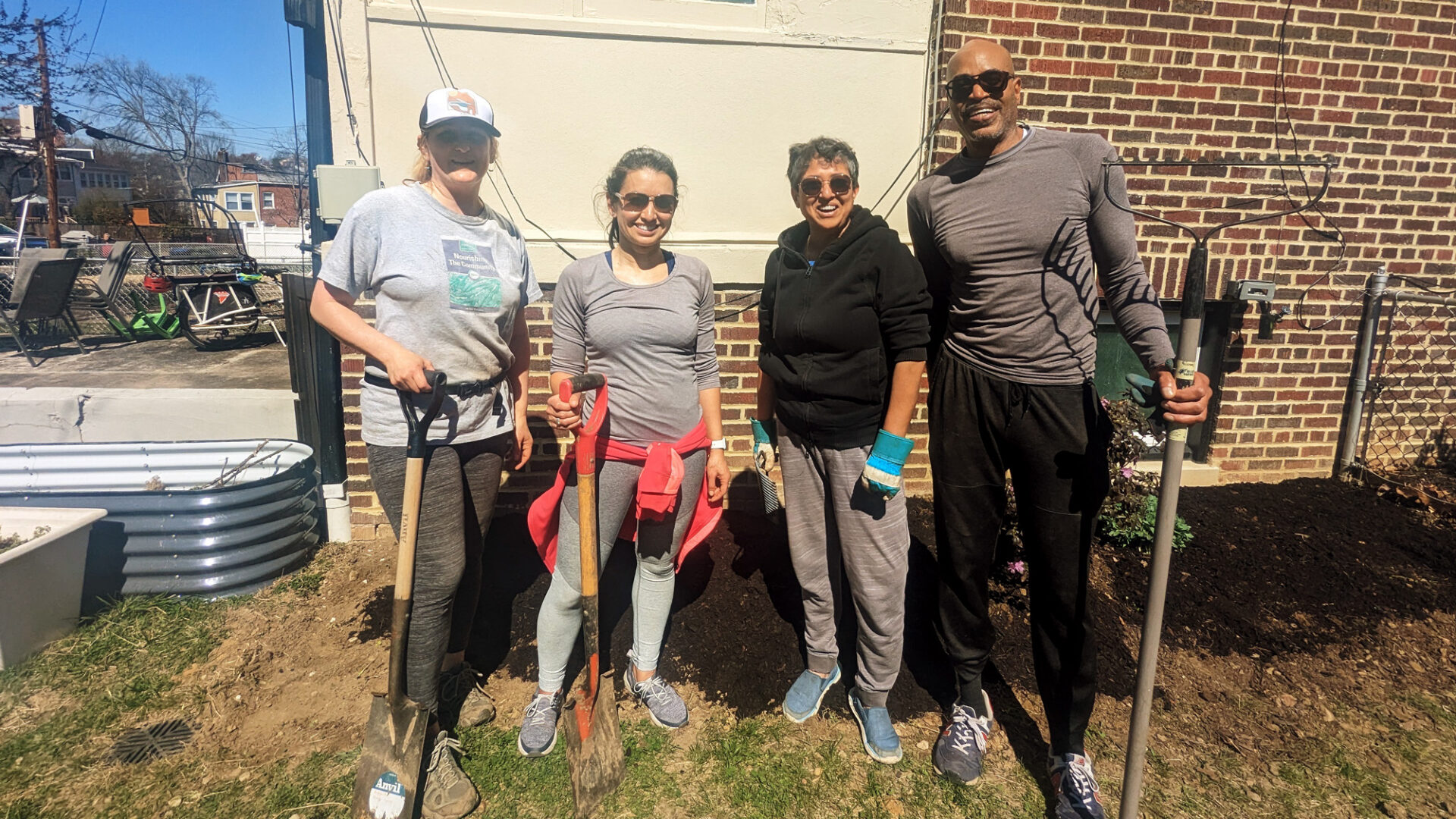
Spring has arrived and the DC Natives First Flower Fridays garden series is gearing up for the season.
Click to learn more about First Flower Fridays and sign up for our latest event date!!
We did that! You did that! DC Natives goal was to not just increase pollinator-attracting plants throughout the District. Our goal was to also create community–and we are proud to say we’ve been able to do both this year.
With 34 new gardens planted in the spring, 43 gardens planted this fall, and 1500 native pollinator plants planted in 6 of 8 wards, we are buzzing with excitement (see what we did there?)
We are thankful to our volunteers, donors, board members, block captains and our growing family of DC Natives gardeners. Your support and excitement continues to fuel our efforts to connect more District residents to pollinators, and each other.
DC Natives is proud to bring together residents from different walks of life and varying levels of gardening. Can you believe we started six years ago in Ward 7 with only 10 gardens? Today, thanks to generous donors, inquisitive residents and community partners, we have planted over 350 residential gardens. We have also answered the call to partnership in order to create community gardens, youth gardens and neighborhood gardens. And we’re not done yet.Your end of year, tax-deductive donations, your word of mouth and your volunteerism helps DC Natives grow. Let’s keep it going! Thank you for support.
Native pollinator plants, bees, and butterflies are great for the environment and all, but for Aubri O’Connor, who was diagnosed with breast cancer in July 2024, bee balm, blazing star, and coneflowers were lifesaving. In addition to taking steps to beat cancer, Aubri added to her to-do list caring for her DC Natives pollinator garden.
“Having something to work on, to get out of bed for, to be excited for, that was sometimes the only thing that got me moving some days,” said Aubri who is the producer & artistic director of Nu Sass Productions and owner & KJ for Kostume Karaoke. “The garden doesn’t need me every day, but it does need me to show up regularly, which was perfect because it doesn’t exhaust me but does motivate me. I’ve also found a certain sense of connection to the process. We planted in the fall, just before it got cold, so all these lovely blooms and greens turned grey and receded just as I was starting to feel the worst effects of radiation. But I know they’re ok, they just need to rest and be reclusive right now, much like myself.”
A Community Gathers
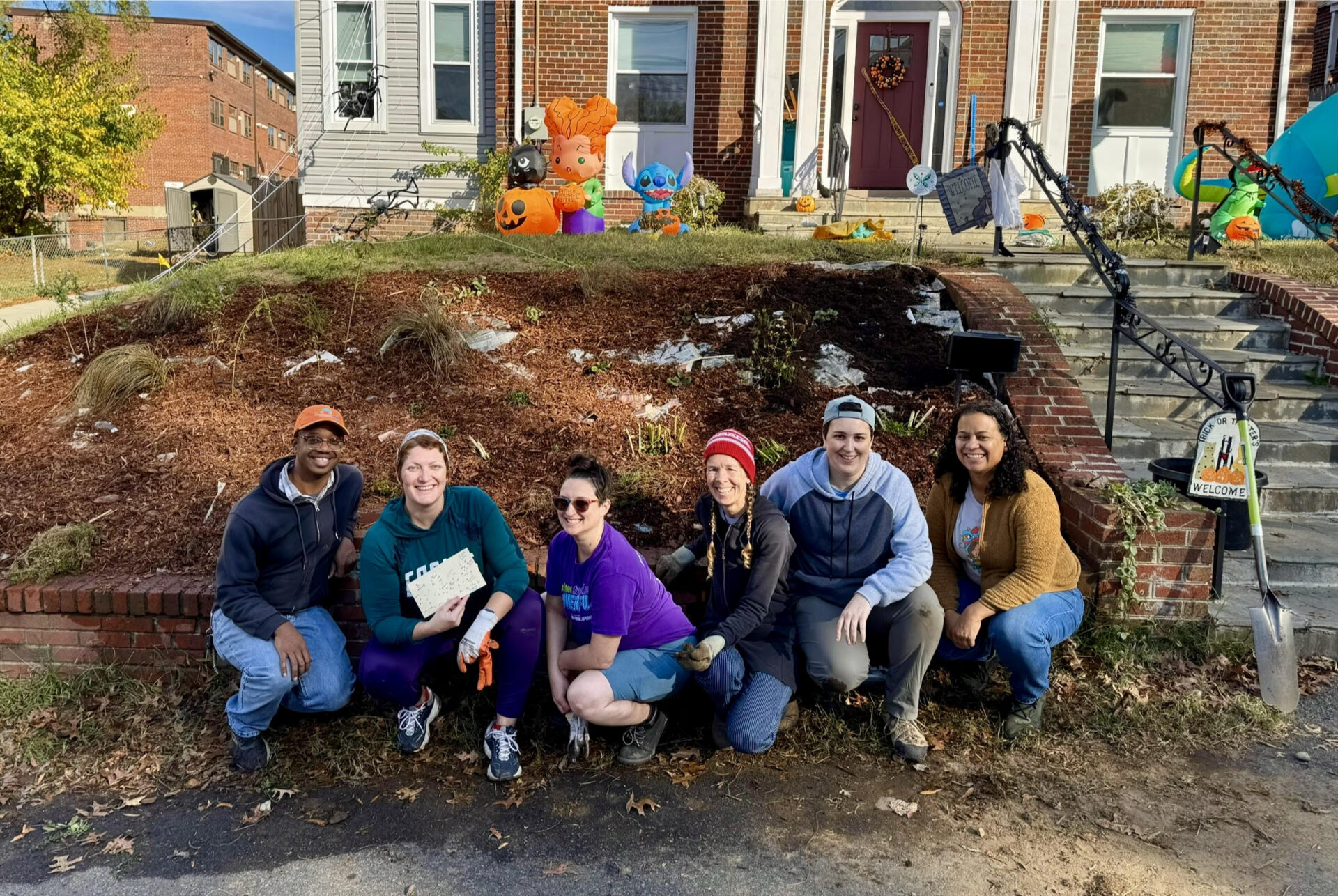
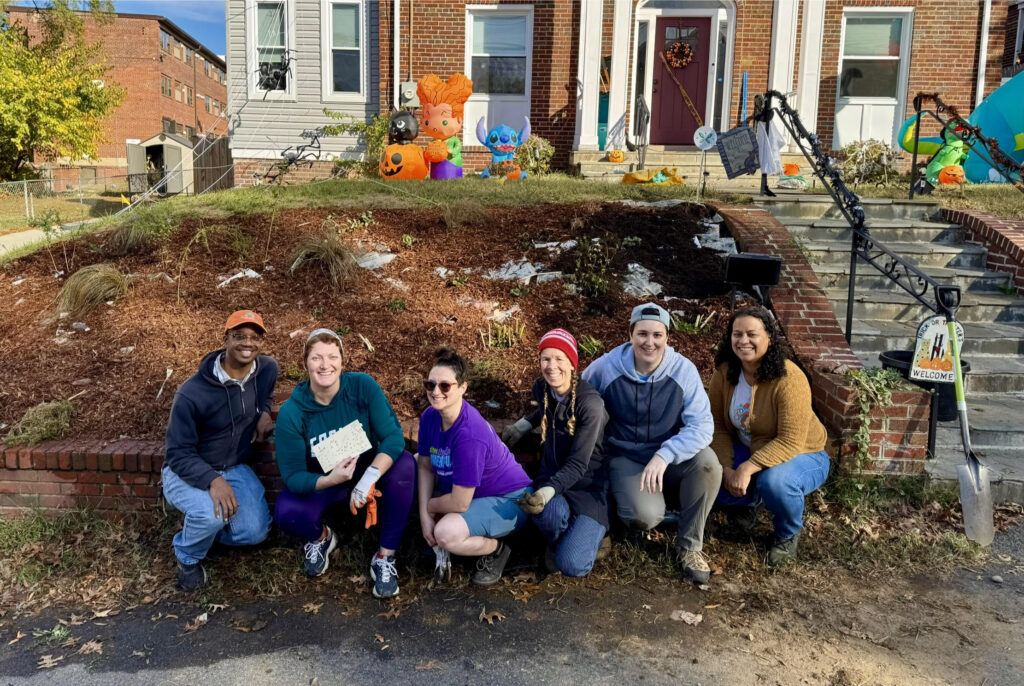
Aubri (second left) with her friends and DC Natives volunteers preparing her fall garden.
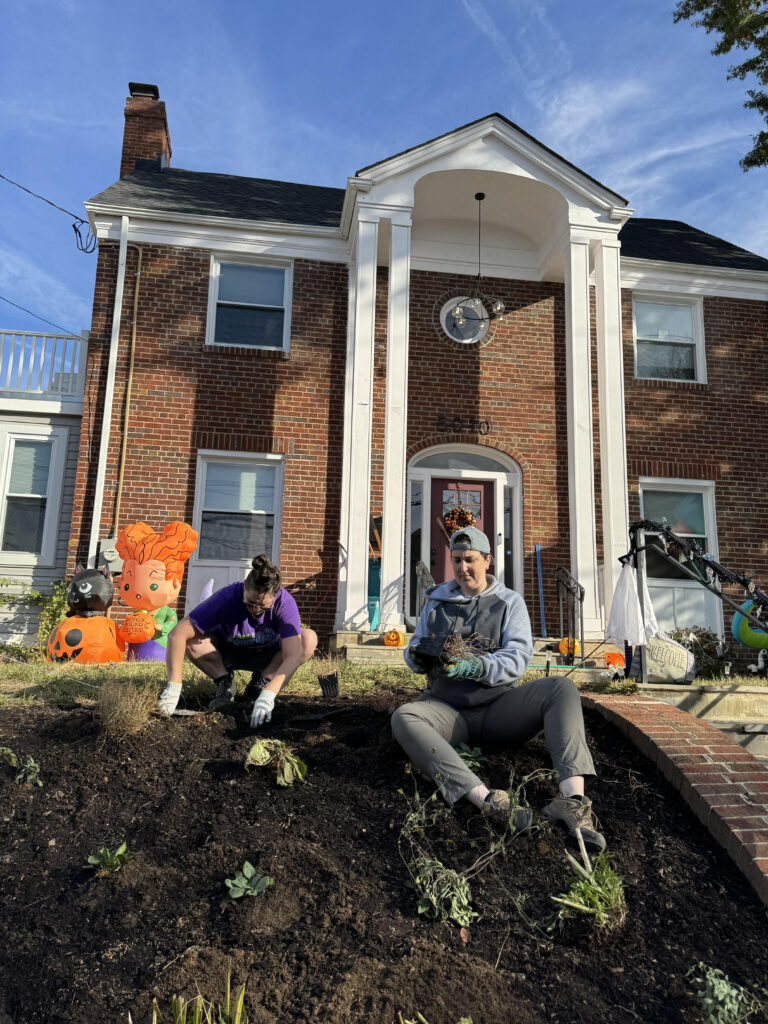
Aubri began the DC Natives’ community pollinator garden journey in the summer but as she was prioritizing her healthcare she was unable to make the deadline for preparing her garden for the fall planting season and the time for the last plant order passed. When we heard about Aubri however, our renegade garden team jumped in action and community members generously shared plant divisions, to help create a thriving, ready-made pollinator garden to bring new life to the hilly front yard of her home that she just moved into this summer.
“It literally brought tears to my eyes,” said Aubri. “People just kept showing up with plants out of their own gardens, inspired to help me when I needed it. So many people gave their time, their energy, their resources, and their love to help a near stranger! I’ve only been in NE DC for 6 months, after 17 years in Petworth. It was an amazing affirmation that I made a great choice picking my new neighborhood, and that I already have a blossoming community here.”
Fun fact: anyone can create their own pollinator garden with divisions from neighboring pollinator garden owners. Simply plant your plant divisions, use leaf mulch, leave areas wild and make sure you’ve got those flowers and grasses in a sunny spot where they can thrive. An added benefit is meeting neighbors and perhaps even exchanging pollinator plants every season. D.C. Natives planted 77 pollinator gardens this year, and Aubri was number 77.
“Having people to laugh with, ask questions, learn … I think this program is as much about growing communities and connections as it is about growing the plants,” said Aubri. “I can’t wait until my energy is back and I can return the favor to my neighbors!”
The Health Benefits of Gardening
According to The Nation’s Health, planting and gardening is beneficial to everyone’s mental and physical health. Fresh air and sunshine boosts our mood and decreases stress. The physical requirements of gardening help reduce heart disease, stroke, high blood pressure and Type 2 diabetes.
“We were pleased to add Aubri to the DC Natives family and get our hands and knees dirty again for this project,” said Executive Director Thorne Rankin. “DC Natives’ members are heavy on community building and when we heard about Aubri and all of the neighbors who were ready to jump right in, it reminded me that our mission to cultivate beauty is not just about planting, but is a testament to the human condition.”
Aubri, who is also a fundraiser and nonprofit manager, said she learned about DC Natives during the pandemic on Buy Nothing, a website and Facebook group that promoties resilient communities through a gift-economy platform (also known as free stuff). Because she was renting in Petworth at the time, she was unable to plant on her property, so she waited until this year when she purchased her home in northeast D.C.
“Once I was able to own my own home, one of the first things I did was look up the program again (as well as the DC seed exchange, the river smart program, and the lawn tools lending library!),” she recalled. “After the wave of emotion, I felt really motivated; I think I had twice as much energy on planting day as I had all week. I’m really looking forward to both my garden and myself bursting into life this spring when we’re both ready and able. It sounds cliché, but it really did help to remember that all things need to have a winter phase in order to grow, and it was ok for me to as well.”
In February 2024, DC Natives shared a survey with our community of pollinator garden program participants in an effort to improve our work. We’re deeply grateful to dozens of community members who took the time to respond to the survey, and are humbled by the overwhelmingly positive feedback we received.
Community members who participated in the survey were among people who have worked with DC Natives to create a pollinator garden since 2017. 93% of respondents said they see pollinators like butterflies, bees and hummingbirds in their gardens. It’s no surprise given 91% said they regularly watered, and 84% said they weeded their gardens regularly.
We are proud to see participants in our pollinator garden program continue to engage with the beautiful spaces we’ve created together.
I LOVE my garden. It has been a source of joy. Working it helps my anxiety, it has given me a point of connection with my neighbors, and it is a beautiful entry point for our family home.
DC Natives program participant
We were also proud to see that our community feels our pollinator garden program is largely accessible. 88.5% of survey respondents said our program was accessible to people with all levels of gardening ability, 65% said it is accessible to people of all ages, and 71% said it is accessible to people from different income levels. Participants shared that we could improve our accessibility to people with different levels of physical ability, with only 40% saying our program is accessible to people in all levels of physical ability. Our team will be working on improving this aspect of our program to reach more neighbors.
What I need is support, support, support!
DC Natives program participant
Nearly 95% of respondents said they felt supported by DC Natives in varying degrees throughout their pollinator garden process. Participants said they found our support with garden design, planting, and access to plants most helpful. 94% of respondents said they had a positive experience with DC Natives and would like to continue partnering with us to maintain their gardens.
Community members had great suggestions for how we can support them going forward. The suggestions we heard most frequently were access to more educational opportunities for gardeners to learn about native plants and maintenance. Participants suggested we create videos featuring native plants on our social media, host webinars or classes, and distribute regular emails about taking care of gardens throughout the year and in different seasons.