Guerilla Gardening: How to create DC Natives Seed Bombs

What are seed balls or seed bombs?

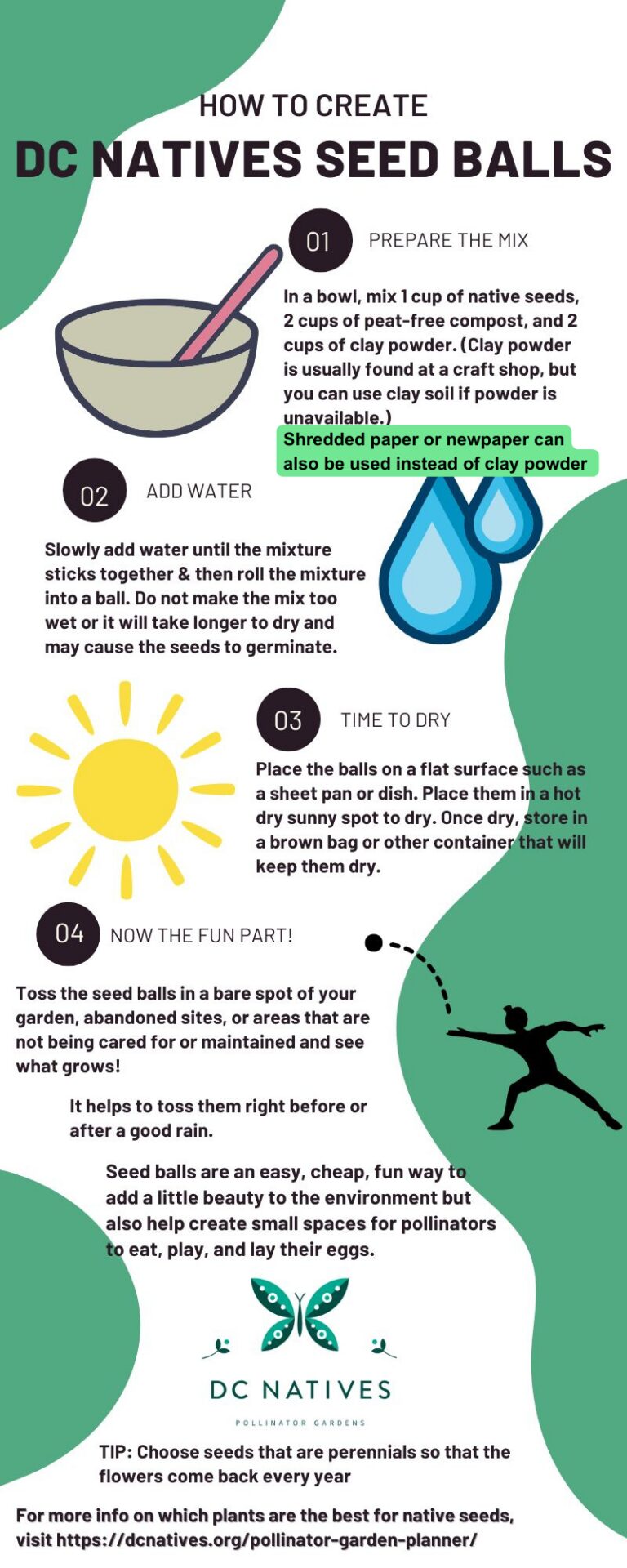
The terms seed ball and seed bombs are interchangeable. Seed bombs are balls made of clay, compost, shredded paper or other material that contains various kinds of native seeds. The balls are designed to break down over time so that the seeds on the outside and/or inside the ball contact the soil to hopefully allow a native plant habitat to grow and flourish. This easy, fun, kid-friendly craft activity helps to increase biodiversity and add beauty in uncommon and some common environments.

Why create seed bombs?

Seed bombs are an easy and accessible tool to add native plants to environments that may have degraded soil or areas overrun by invasive species. Making seed bombs is very inexpensive but has a priceless effect in our communities. This fun activity is also very easy to replicate in a classroom setting or with kids involved, so it helps to educate our youth on the benefits of conserving our pollinators. Seed bombs are also consider a form of urban guerrilla gardening. Seed bombs deliver seeds to key areas that, as the plants grow, eventually will help to provide food and habitat for bees, butterflies, moths, and so many other amazing pollinator species. 

Cultural and Historical Context

According to an article on EpicGardening, the practice of creating seed balls started in Japan. Seed bombs are an ancient Japanese practice called Tsuchi Dango, meaning ‘Earth Dumpling’ (seed bombs are made from clay earth). The revolution act of making seed bombs was reintroduced in 1938 by a Japanese microbiologist/ farmer Masanobu Fukuoka (1913–2008).

How to make Seed Bombs?

There are multiple ways of creating seed bombs, and we’ve made this easy-to-follow recipe to make seed bombs.

We hope you enjoy this activity and we appreciate your help “rewilding” the earth. If you loved making seed bombs, please share your photos/videos on Instagram, Facebook, or email us at dcnatives.org@gmail.com and tag DC Natives so we can share with our community the good work you are doing to help!

We have also included a video on the Resources playlist on the DC Natives YouTube channel!

Common Weeds: An Identification Quick Guide

As spring arrives, so do some of the common weeds that can make gardening a challenge.

Weeds are highly adaptable plants that grow vigorously in environments often not suitable for other plants to grow but can compete effectively for resources needed by other plants, especially those within a native pollinator garden.

Weeds often interfere with a human gardening goal or process like reducing crop yield, harboring unwanted pests within a garden space, or invading established native plant areas and reducing the space for useful habitat.

Keep in mind though that many plants that we often consider weeds, have great use to herbalists and sometimes may even been edible. Many plants that are considered weeds also have great value to people in Indigenous communities and African diaspora; plants like hibiscus, dandelion, stinging nettle, clover, lamb’s quarters, echinacea, and elderberry.

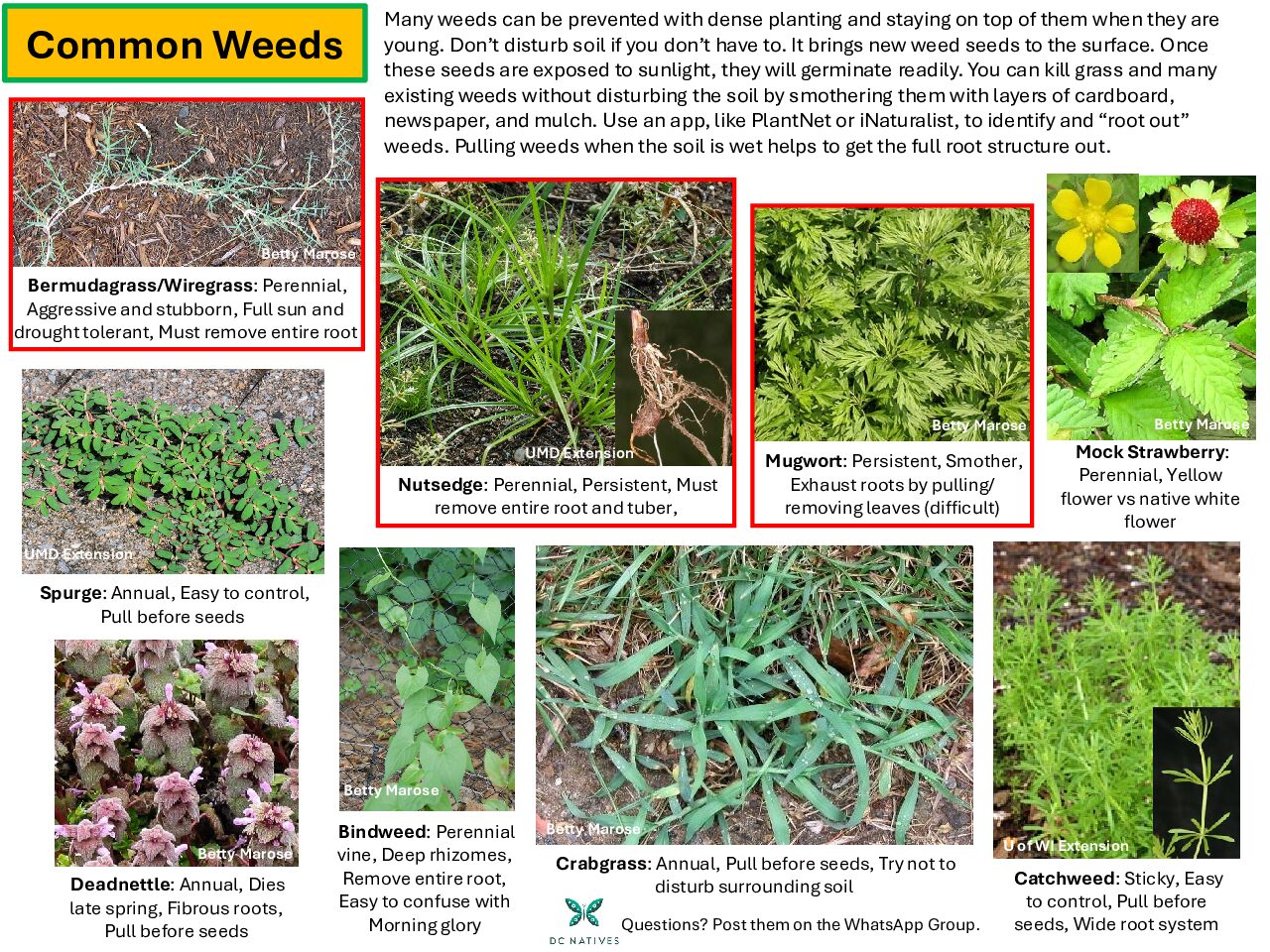
In order to help with identification of common plants that are considered weeds in the garden, we have created a guide to some of the most common. This list is not all inclusive but should hopefully ease the task of trying to identify the plants solely based on sight.

Hopefully this guide will help you quickly identify these plants so that there is no confusion with the sprouts that come up for the native plants in your pollinator garden. Removing weeds can help continue to keep your pollinator garden successfully growing for years and years to come.

Don’t have a DC Natives Pollinator Garden yet?

Sign up to learn how to host a DC Natives sponsored pollinator garden!

Leave the Leaves! Nature’s Free Compost Offers Cozy Winter Homes for Pollinators

By Josh Bayard, Master Gardener, Master Naturalist, and Certified Pollinator Steward

Whether you are new to gardening or have been gardening for years, the proper ways to prepare your native pollinator garden for winter can often cause a bit of confusion. It is important to be aware of how you manage your garden in autumn because each thoughtful step you take can lead to phenomenal results in the conservation of the insect and animal pollinator species. 

You may ask, “Why does it even matter?” It matters because there are hundreds of pollinators and other animals that hibernate in the leaf layer or underground during the winter including some species of bumble bees, fireflies, moths, butterflies, bats, turtles, and salamanders. It is very important to be the best stewards of our gardens so that we reduce the harm we may cause to generations of pollinators just waiting to burst out of the natural ground habitat once the temperatures and environment are suitable. 

Did you know that out of the more than 20,000 bee species in the world, almost 70% create their nests underground? The female queen lays her eggs in the underground nests and in the spring the baby bees make their way out of the nests and start the pollination process over again keeping the cycle of life going in our ecosystems. 

The other percentage of bees make their homes in the stems and stalks of the dormant plants of the garden. There is no need to trim any of your plants back. Leave the dormant plants where they stand. They will make for a beautiful landscape once the snow falls and will give the garden a bit of depth instead of a flat and tidy garden space.

When was the last time you saw a firefly? If you have seen them lately, has it been fewer than what you remember from your childhood? When home gardeners put leaves and sticks and other detritus in leaf bags in the fall, they are disposing of the key component of the winter garden that the firefly larvae need to survive.

Since many firefly species spend the larval stage under layers of fallen leaves or even under the soil, it is important to leave the leaves where they fall or even add more to the area of your garden. Many firefly species spend one to two years as a larva and about 30 days as an adult. Can you see why it’s so important to leave the leaves and soil alone yet?

Leaves are nature’s free compost. Studies have shown that leaves that are left over many seasons sequester carbon in the soil and help to mitigate the harmful effects of climate change. If the yard waste is taken to be composted by the city, we then have to go buy the leaf compost after it’s processed or get a limited amount for free. 

If you do choose to compost your leaves, the University of Maryland Extension office has an easy guide on how to make compost at home. It may have you reconsider bagging up your leaves and setting them on the curb or pushing the leaves to the curb for the city to suck up to move to a processing facility. 

What else should I know about preparing my garden for winter?

Now that you are armed with the knowledge of utilizing nature’s free compost, DC Natives Pollinator Gardens offers these additional tips on preparing your garden for the winter: 

Know your frost date

Check your first and last frost dates to have an idea when it would be best to disconnect your irrigation or soaker hose system and winterize your hose bib to prevent freezing. If you have a soaker hose, that can be left where it is in the ground over the winter or you can unpin the soaker hose and remove it from the garden to store inside for the winter. Unscrew the soaker hose from the solid hose and then detach the solid hose from the hose bib. Then you should store your solid hose in a safe location over the winter. If you use a timer, also disconnect it, remove the batteries, and store it out of the elements.

Leave your native pollinator plants where they stand

There is no need to cover your native plants or do anything extra. They are native, so they are acclimatized to the weather patterns in the area and are very resilient, even in some of the coldest temperatures.

Say no to mulching … for now

Wait until the spring to lay down new mulch. It is often hard for emerging pollinators to make it through deep layers of mulch in the spring as well as the pollinator plants that need a little help finding the sun. Also, since you will leave the leaves, there won’t be an immediate need for mulch. 

Ditch the pesticides

The use of pesticides goes against the entire mission and purpose of what DC Natives does. Spraying pesticides or using any “cide” is extremely harmful to pollinators, plants and humans alike. The pesticides and herbicides often end up in our waterways which damage much larger segments of the overall ecosystem. Birds and other rutting animals eat the seeds and build nests with plant materials covered in toxic chemicals which harms the adults as well as the offspring. Find natural ways to manage pests, like protecting the beneficial insects in leaf litter, in order to limit the overall impact you have on your immediate environment as well as the bigger picture. 

Together, we can change the world for the better, but the change starts inside each one of us to become a better version of ourselves. Happy Autumn!

Master Gardeners Rodrick West and Hollis Luzecky contributed to this article.
Community Links

Community Links

Resources

Endangered Species Coalition

The Endangered Species Coalition’s mission is to stop the human-caused extinction of our nation’s at-risk species, to protect and restore their habitats, and to guide these fragile populations along the road to recovery. 

Society for Biodiversity Preservation

The Society for Biodiversity Preservation protects the earth and reverses biodiversity loss through local habitat conservation projects and educational programs undertaken and performed by citizen scientists.

Washington Youth Garden

Washington Youth Garden is a program of the Friends of the National Arboretum.  Their beautiful gardens are a critical part of the industry-leading programming to educate students on science, food and environmental stewardship.

Rooting DC

DC Natives supports Rooting DC, an annual, local, free forum that provides resources and education on urban agriculture, food systems and protection of the environment.

About Pollination

Pollination

Pollen is a powdery substance produced by flowers.

How does it work?

Pollinators are animals that move the pollen from flower to flower

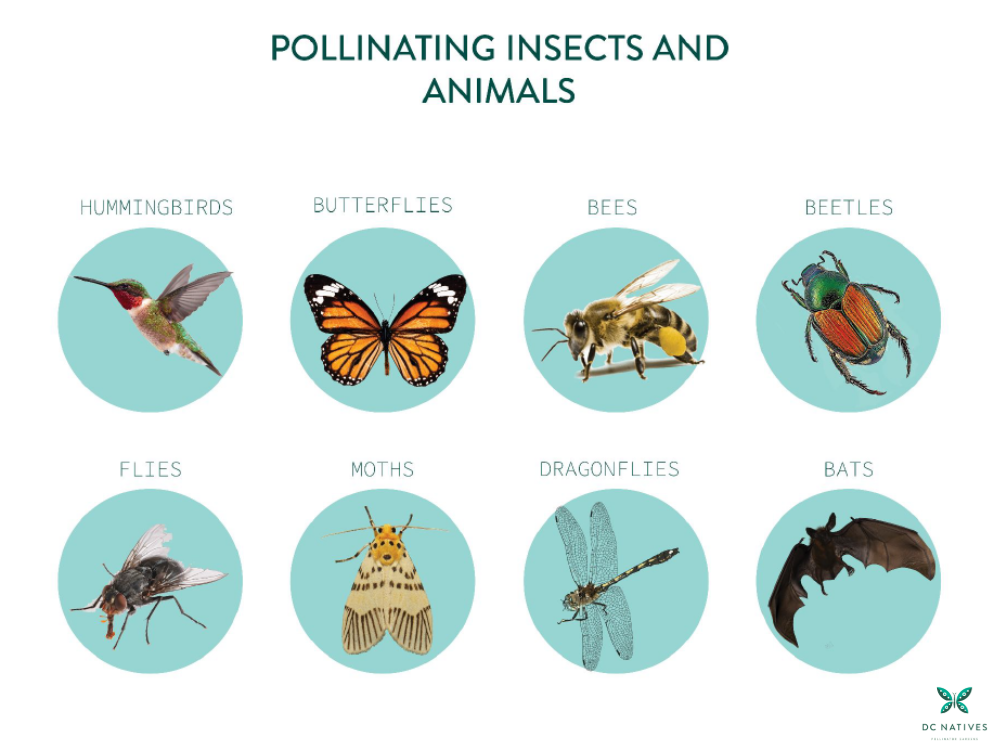
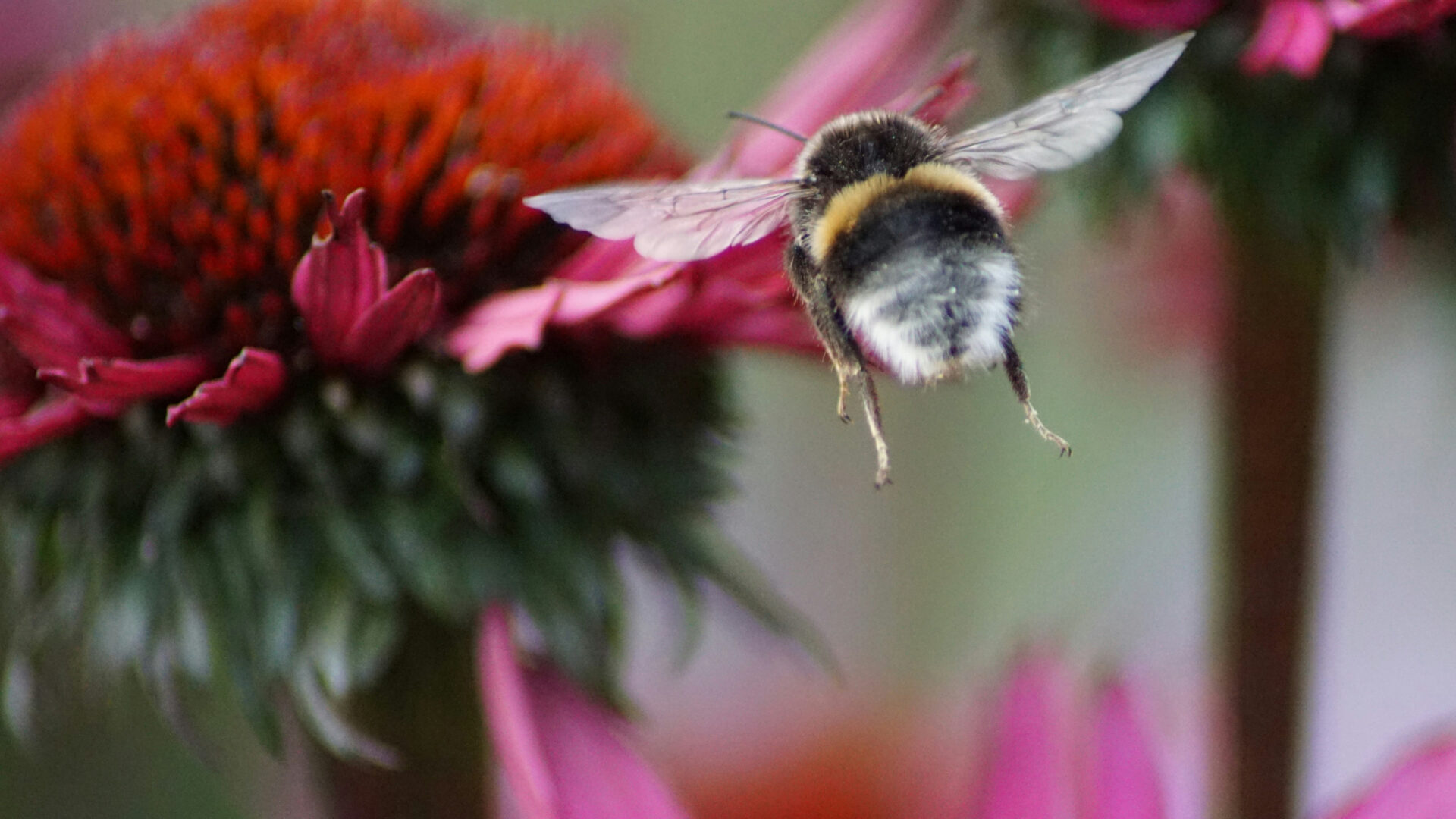
Pollination is the first step in a process that produces seeds and fruits. 75% to 95% of flowering plants need help with pollination. Our ecosystem relies on pollinators to help plants reproduce. Bees, bats, butterflies, birds, beetles and other insects are all pollinators.

Why is it important?

Many pollinators are at risk of becoming extinct

Pollinators are in crisis now for a variety of reasons: habitat loss, pesticide use, climate change. Many pollinators are at risk of becoming extinct, endangering many ecosystems.

Without pollinators, millions of plants would never grow. If they never grow, the thousands of other species that depend on the plants to survive would be devastated. It would be catastrophic for humans who rely on pollinated plants for food like apples, strawberries, pears, avocados, onions, coffee, and many nuts. One thing we can do is increase pollinator habitats by planting flowers and other pollen-producing plants, providing food for these at-risk pollinators.

Help us increase pollinator habitats and create local beauty for DC residents

How to plant a pollinator garden

Introductory questions for DC Residents

Would you like help with your pollinator garden?

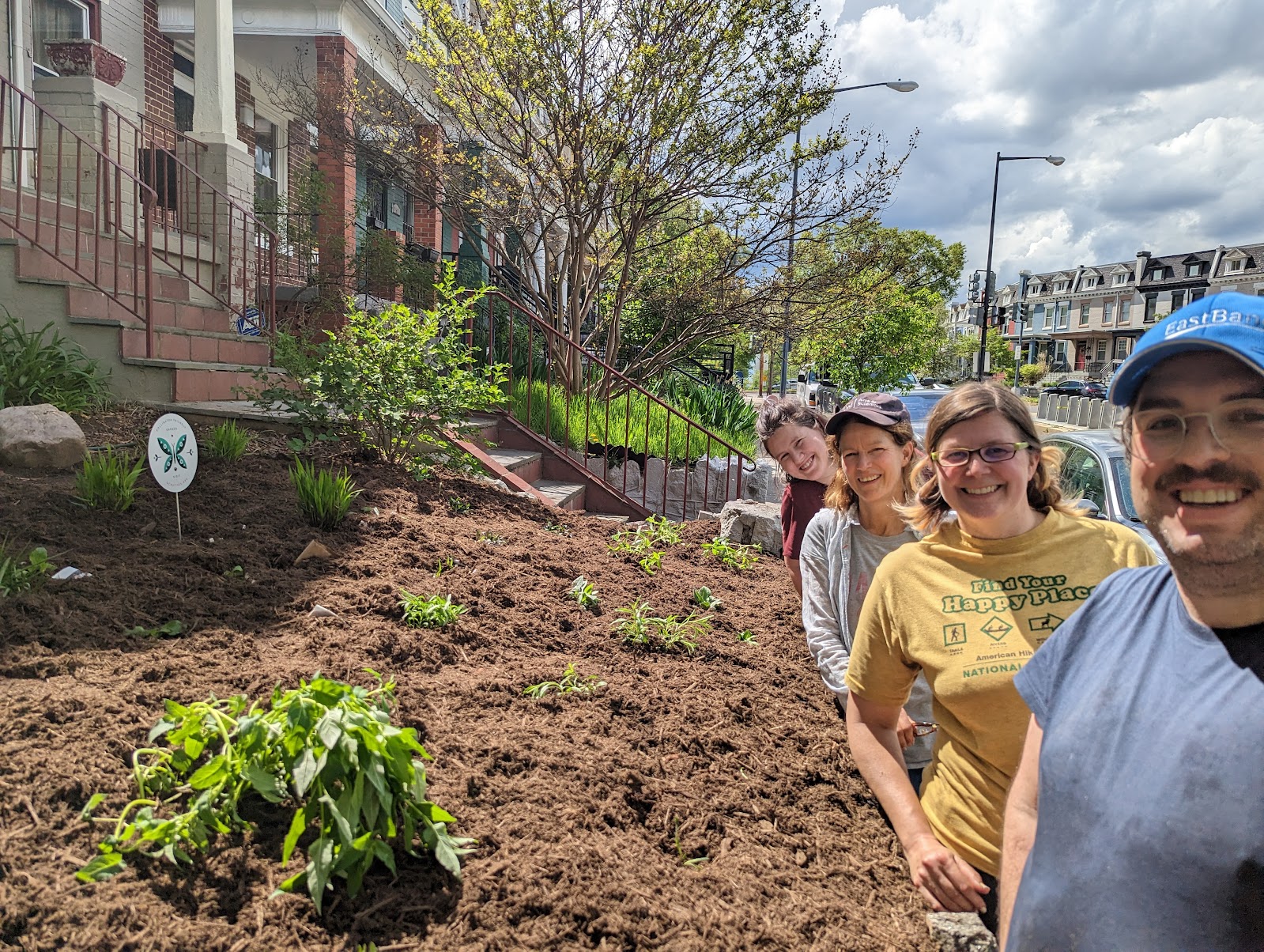
DC Natives can sponsor your garden. Complete the sign-up form below and we’ll contact you and invite you to an upcoming (free) information session.

Do you have an existing pollinator garden?

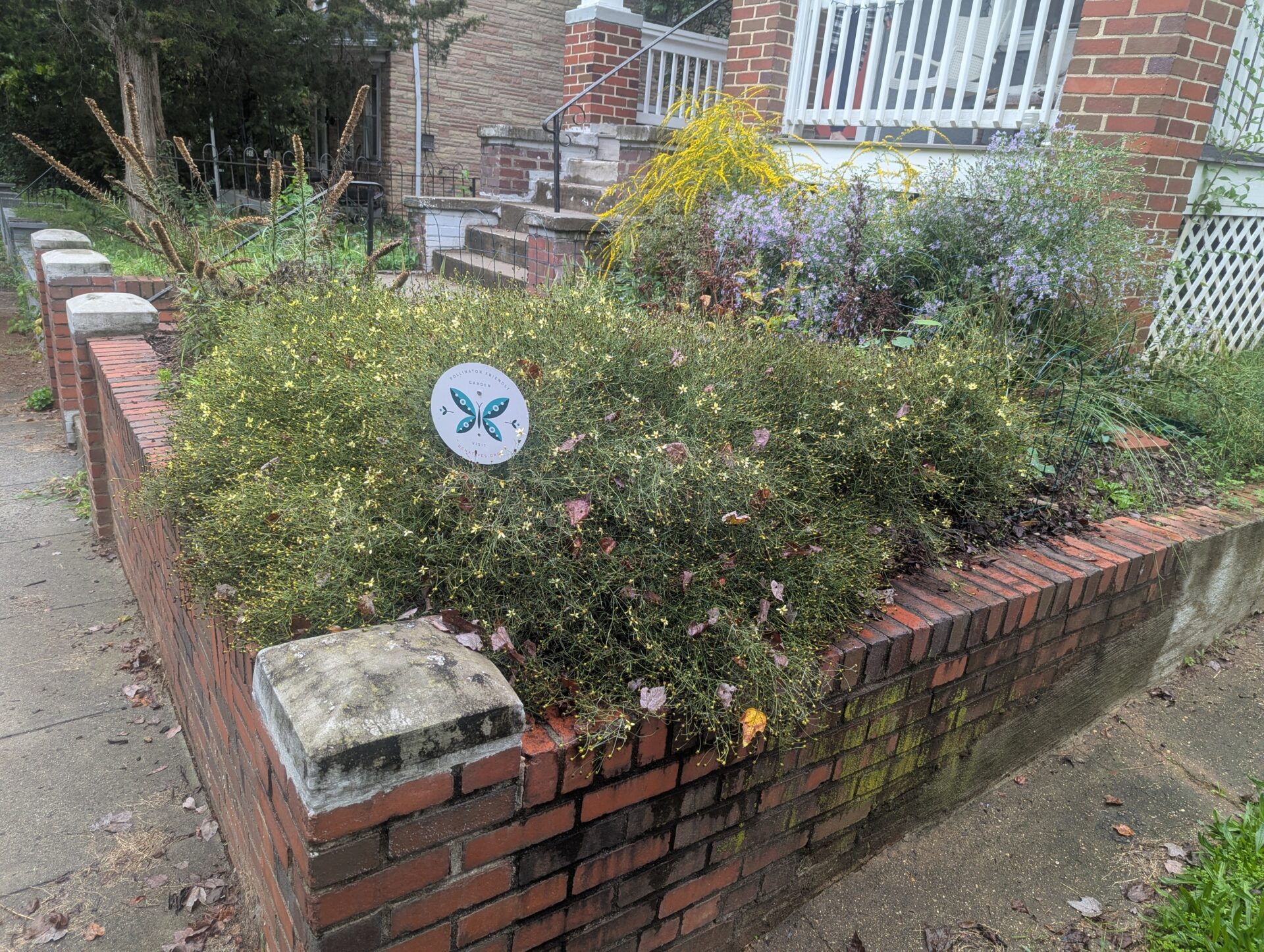
Add your local DC garden to our map! Together, we can turn the District into a flourishing pollinator haven.

Step One

Make a plan for your pollinator garden

Thoughtful design and planning will make your pollinator garden stunning and affordable, with minimal maintenance.

Things to consider when planning your pollinator garden

Light

Gardens need at least six hours of sun per day.

Water

A water source is absolutely necessary. Your hose should easily reach your garden. Watering cans may be enough for container gardens.

Surface

Gardens can go in-ground, in a raised bed or in pots or containers.

Traffic

A little distance from active play areas and pet spaces will keep your corner of beauty safe.

Step Two

Be a designer

Your garden can be a reflection of your taste and personality. Have fun with it!

Plants that will flourish and blossom for years

Listed early bloomers to late summer beauties

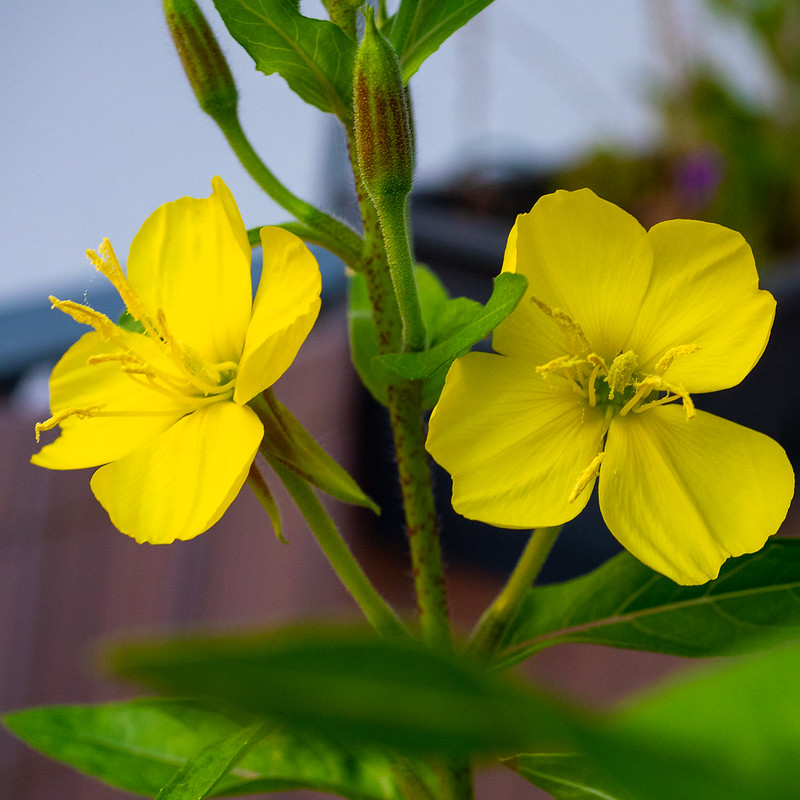
Evening Primrose

Oenothera fruticosa
Yellow or Soft Pink
12-18″
Learn more

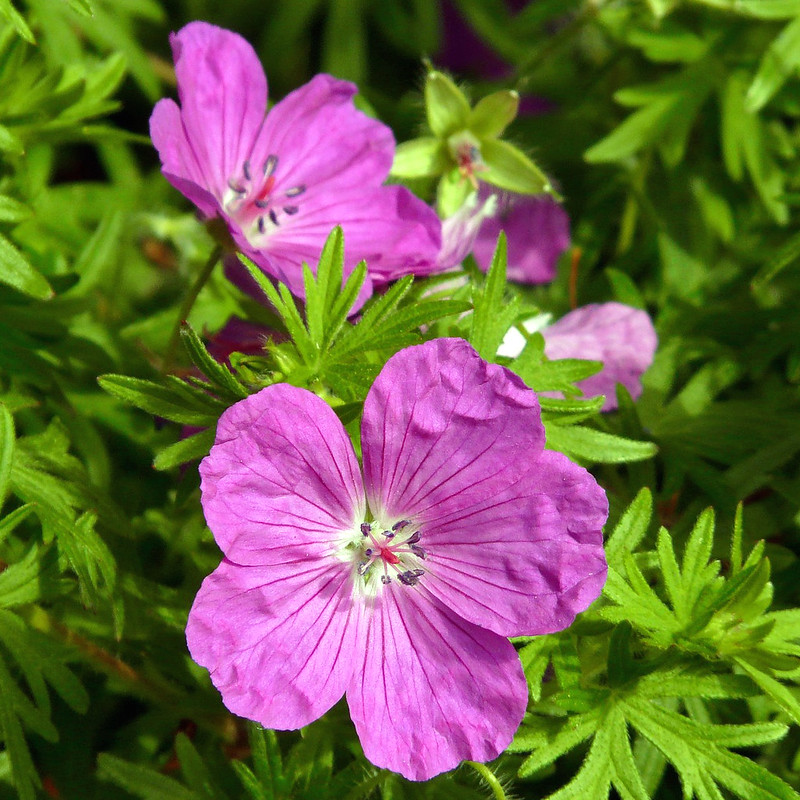
Cranesbill Geranium

Geranium maculatum
purple
8-15″
Learn more

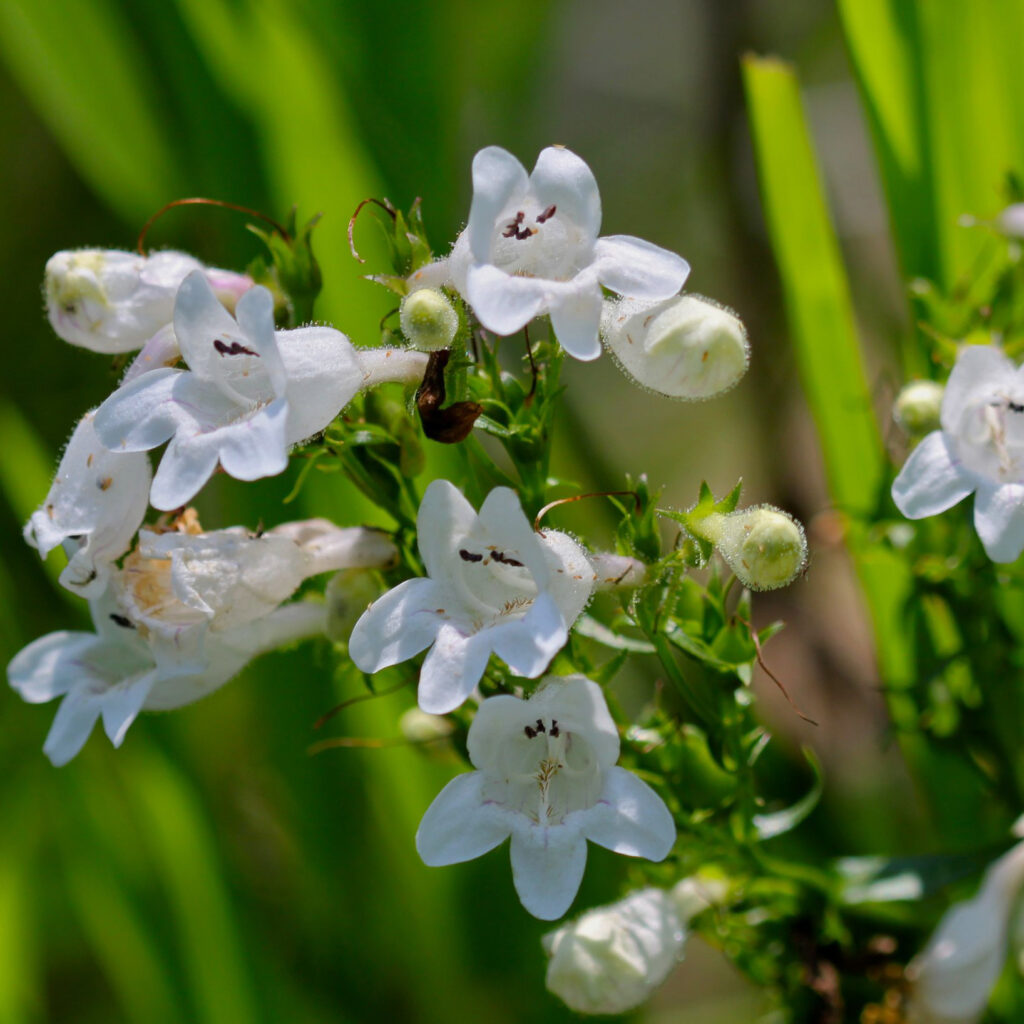
Beardtongue

Penstemon digitalis
White and Pink
18-36″
Learn more

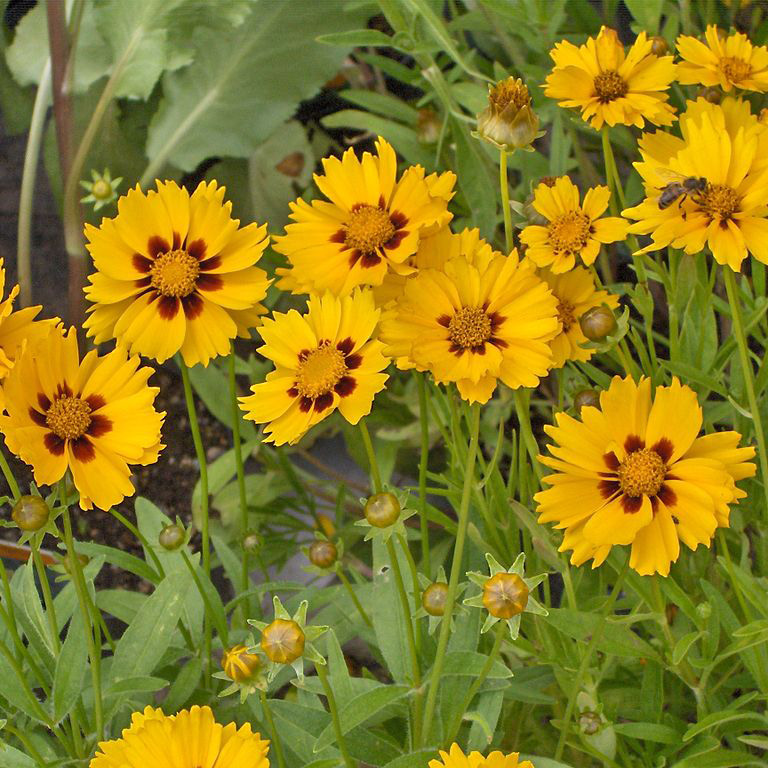
Tickseed

Coreopsis lanceolata
Yellow
12-24″
Learn more

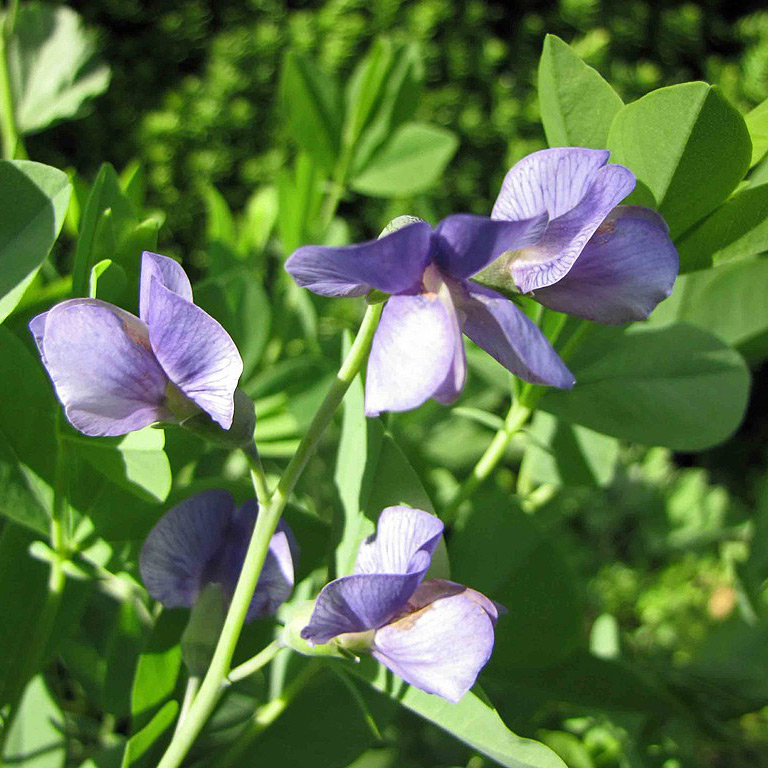
False Indigo

Baptisia tinctoria
Yellow or Blue
36-42″
Learn more

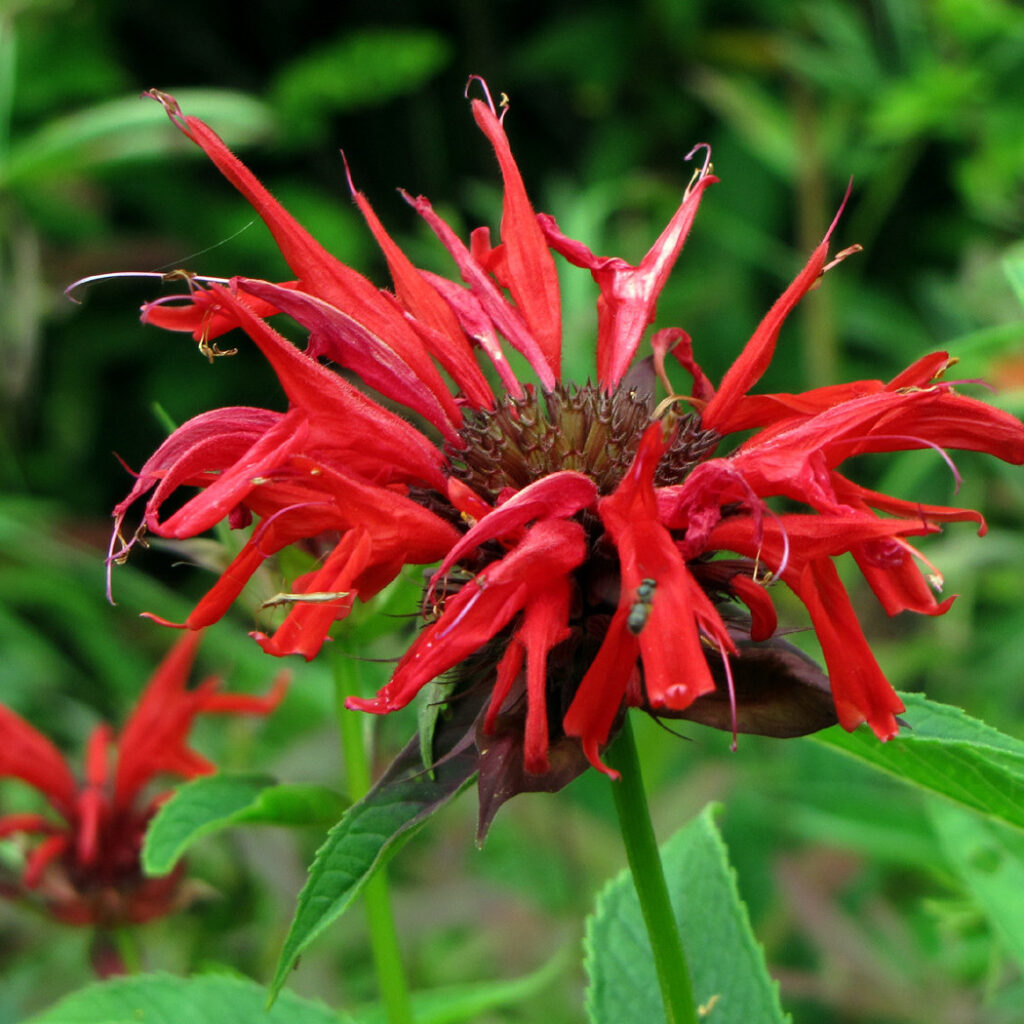
Bee Balm

Monarda didyma
Red, Pink, or Purple
18-36″
Learn more

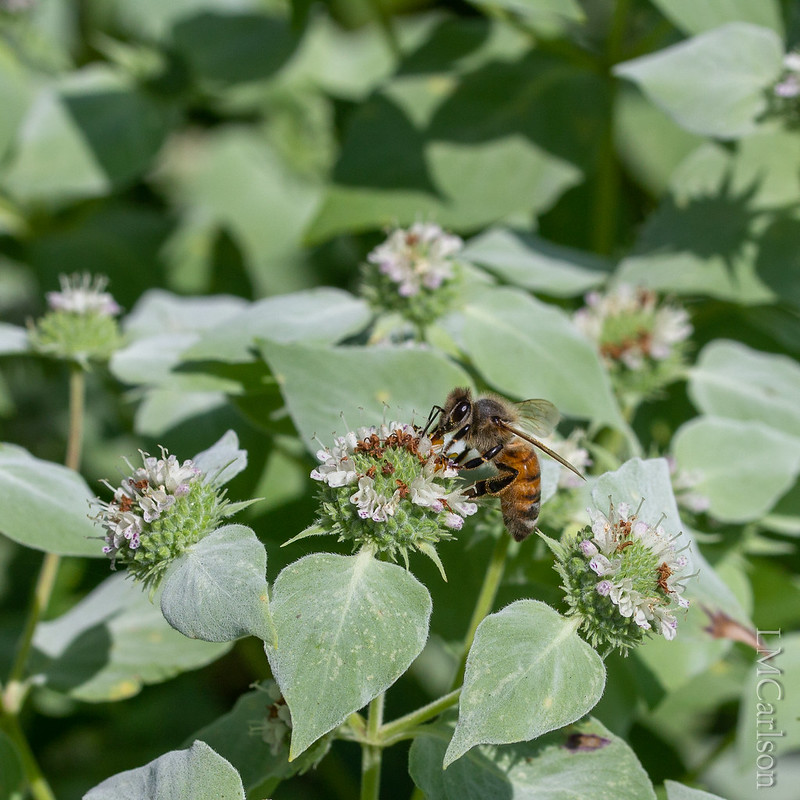
Mountain Mint

Pycnanthemum muticum
White
12-24″
Learn more

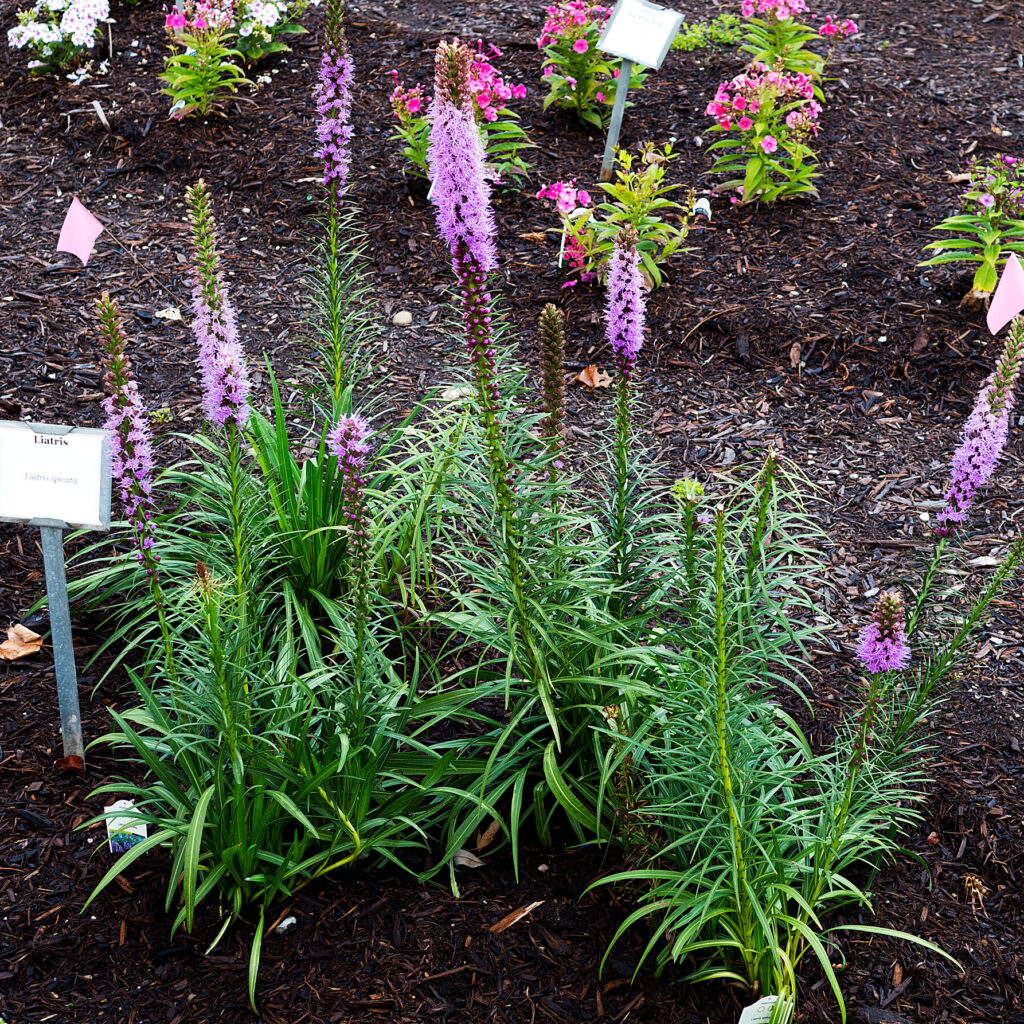
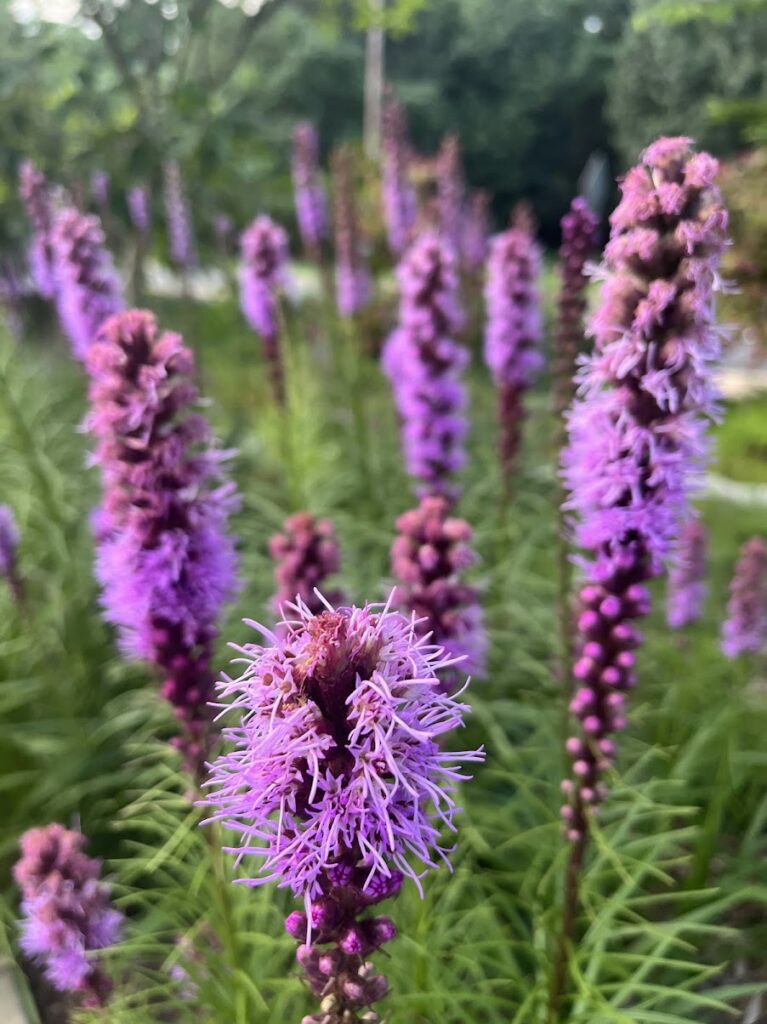
Blazing Star

Liatris spicata
Purple
20-24″
Learn more

Coneflower

Echinacea purpurea
Lavender
18-36″
Learn more

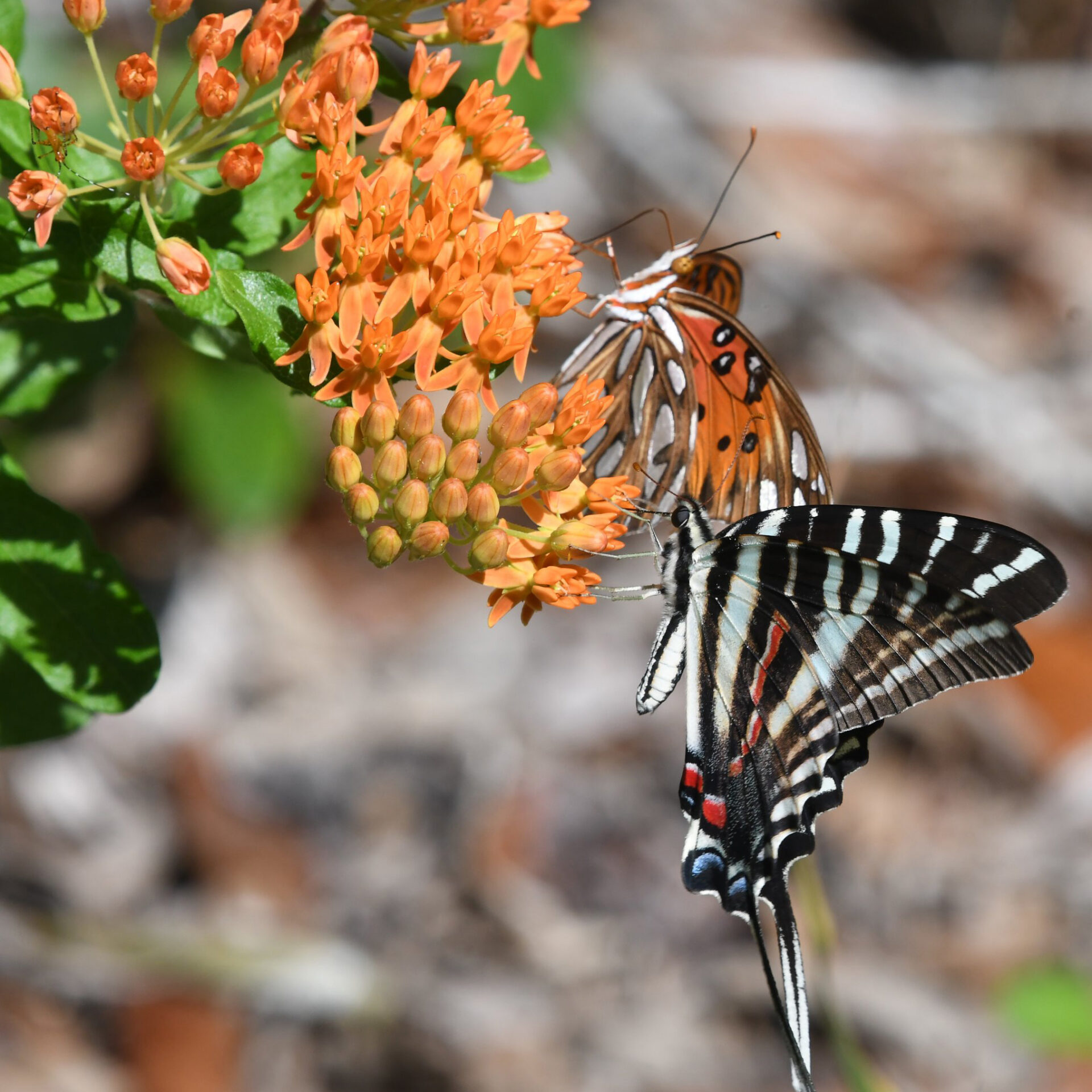
Butterfly Weed

Asclepias tuberosa
Orange
18″
Learn more

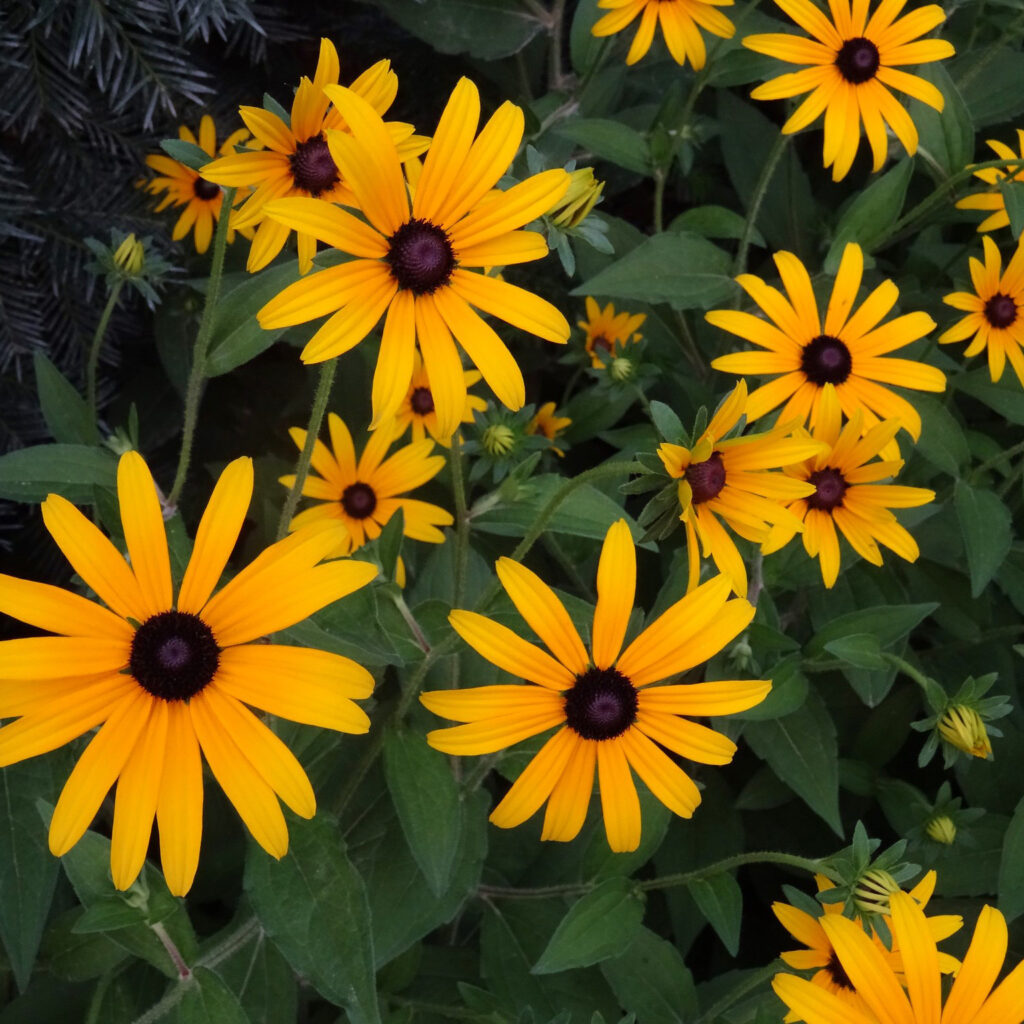
Blackeyed Susan

Rudbeckia fulgida
Yellow
18-36″
Learn more

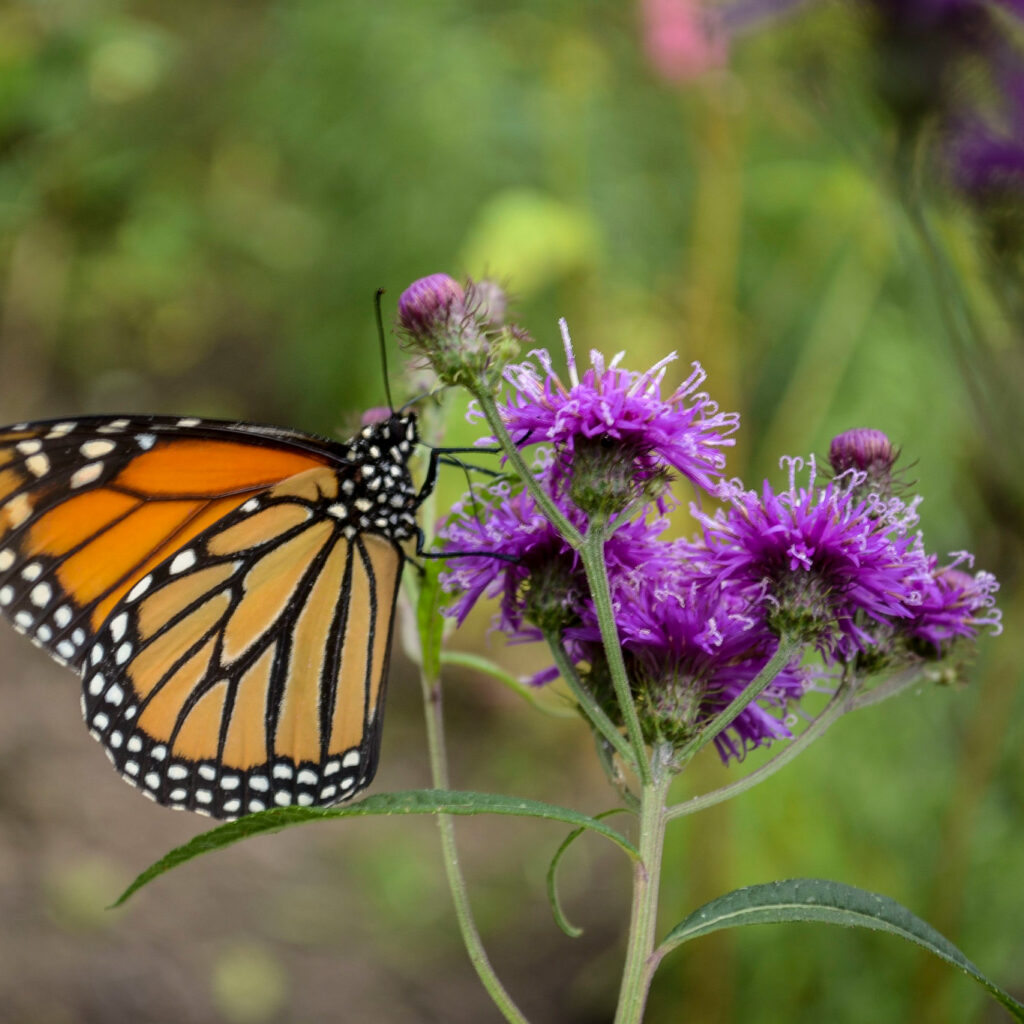
Ironweed

Vernonia noveboracensis
Deep Reddish-purple
5-8′
Learn more

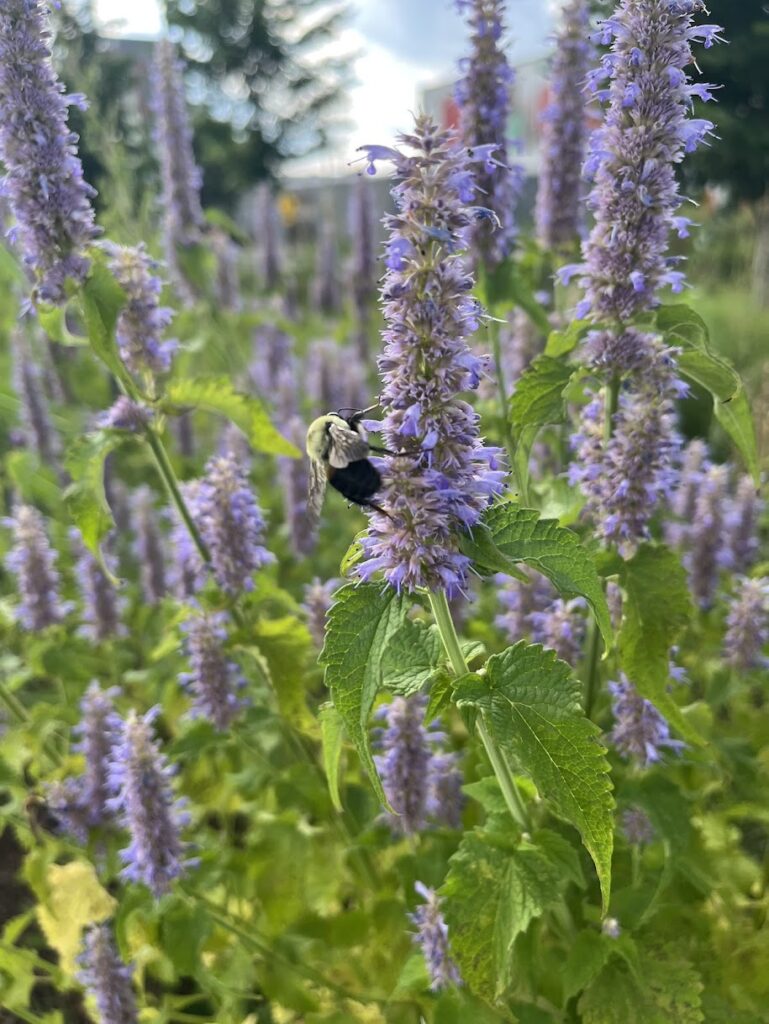
Anise Hyssop

Agastache foeniculum
Purple
18-36″
Learn more

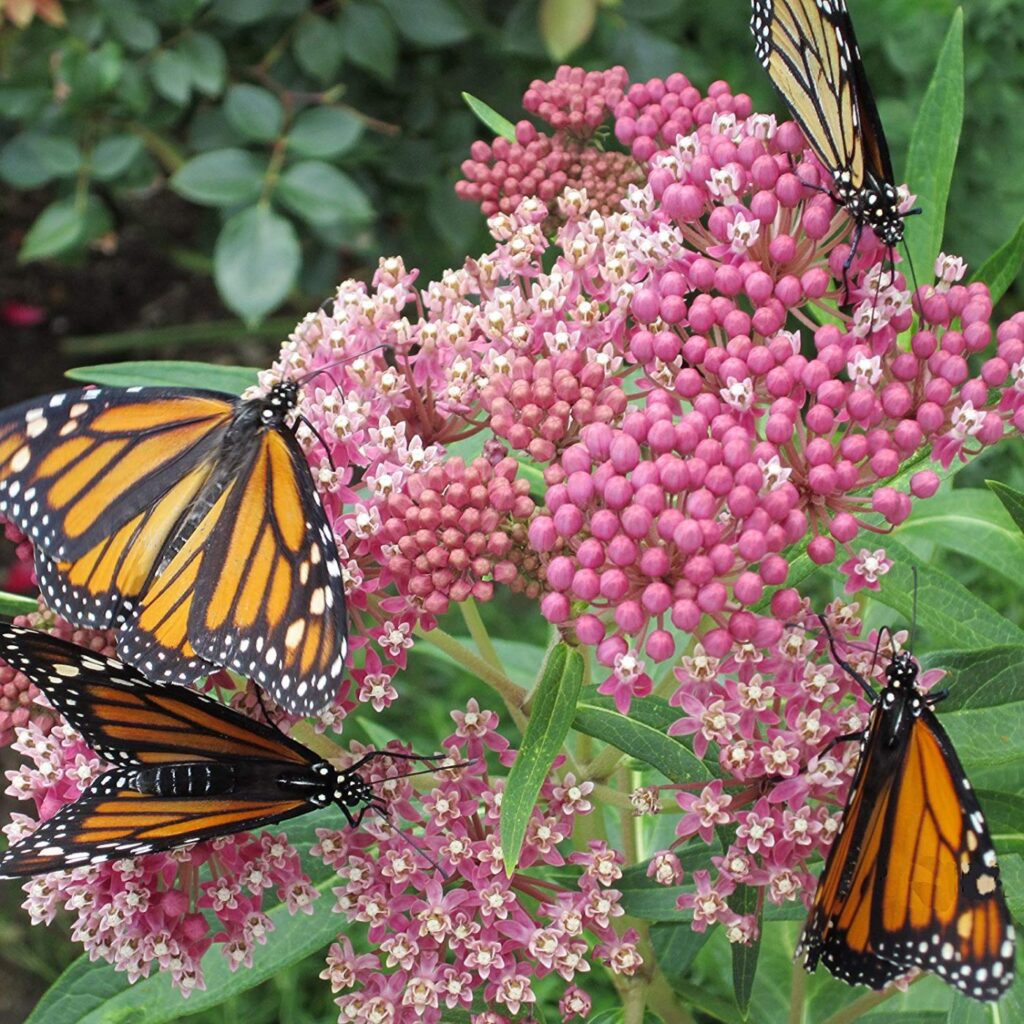
Swamp Milkweed

Asclepias incarnata
Pink
24-36″
Learn more

Aster

Symphyotrichum novae-angliae
Blue
24-36″
Learn more

Goldenrod

Solidago sempervirens
Yellow
24-36″
Learn more

Find more Mid Atlantic pollinator-friendly plants.

Things to consider when designing your pollinator garden

Rule of 3

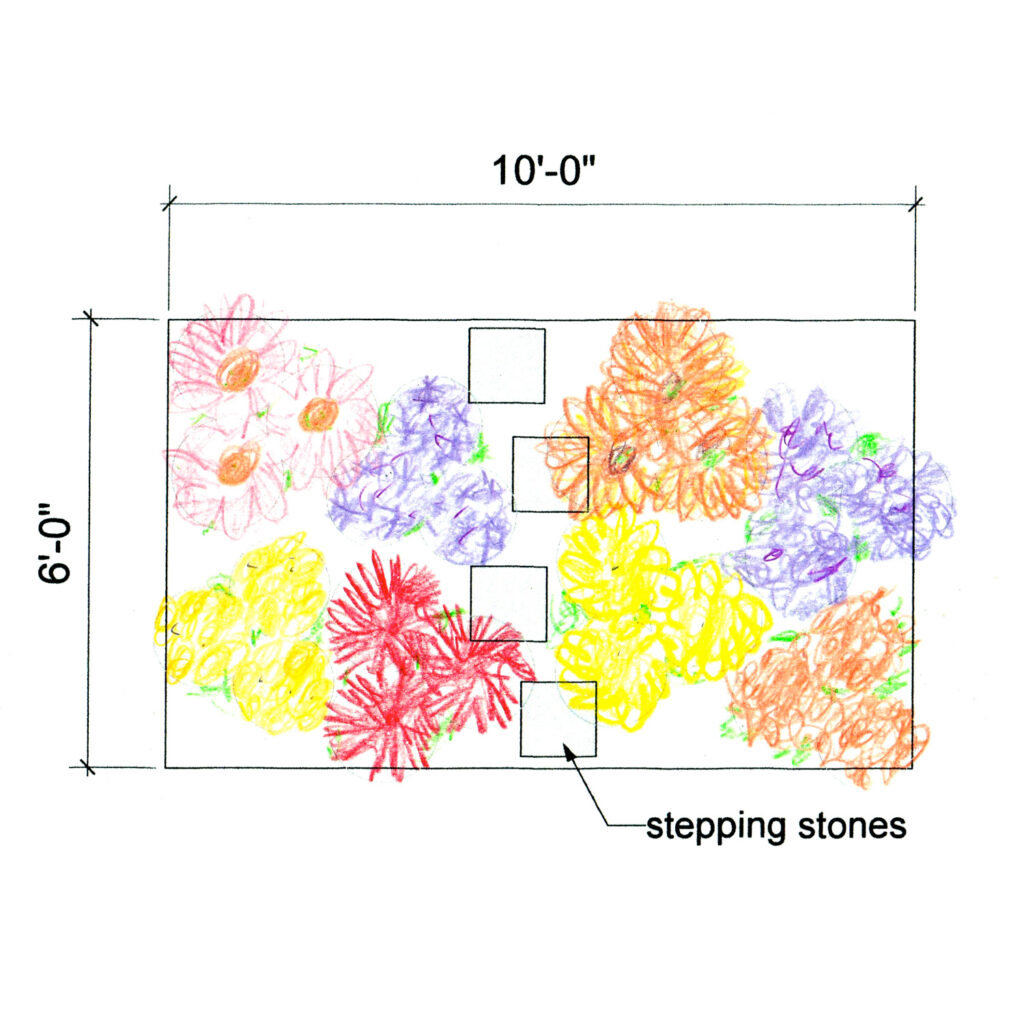
Plant for 3 seasons: spring, summer, and fall; aim to have 3 different species in bloom each season; and plant in groups, at least 3 of each variety.

Color

Pick what you love. Some plants come in a variety of colors, so read labels carefully. Different colors attract different pollinators.

Height

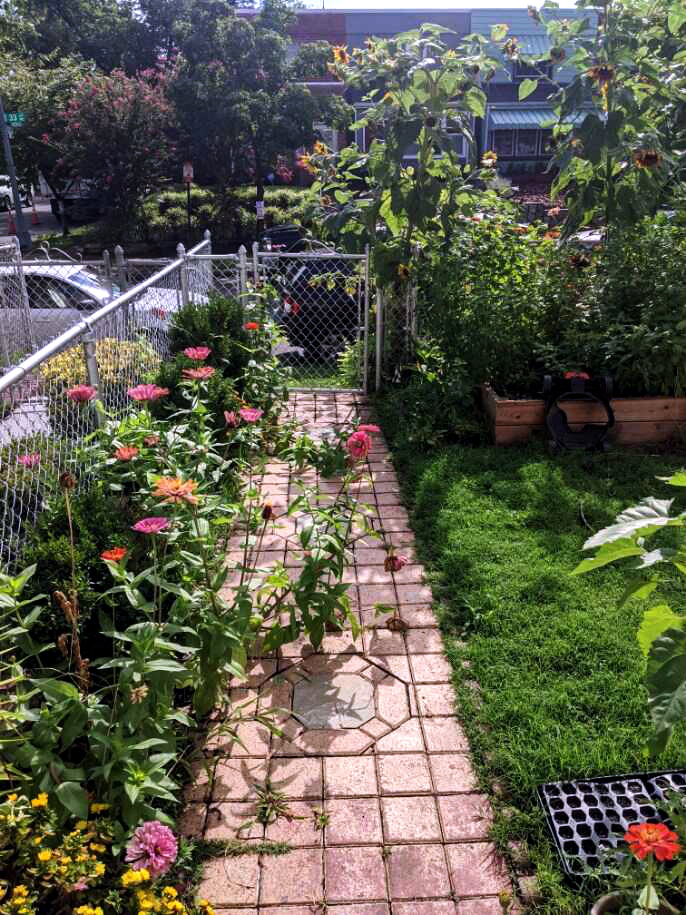
Plants can range from 6″-6′ Consider the size of your space. For example: Tall plants can look great against a wall or fence; Walkways can look beautiful lined with knee high blooms.

Season of Blooms

Nature offers plants that bloom early spring through late fall. Pair early flowers with later bloomers to have color all season.

Host and Nectar Plants

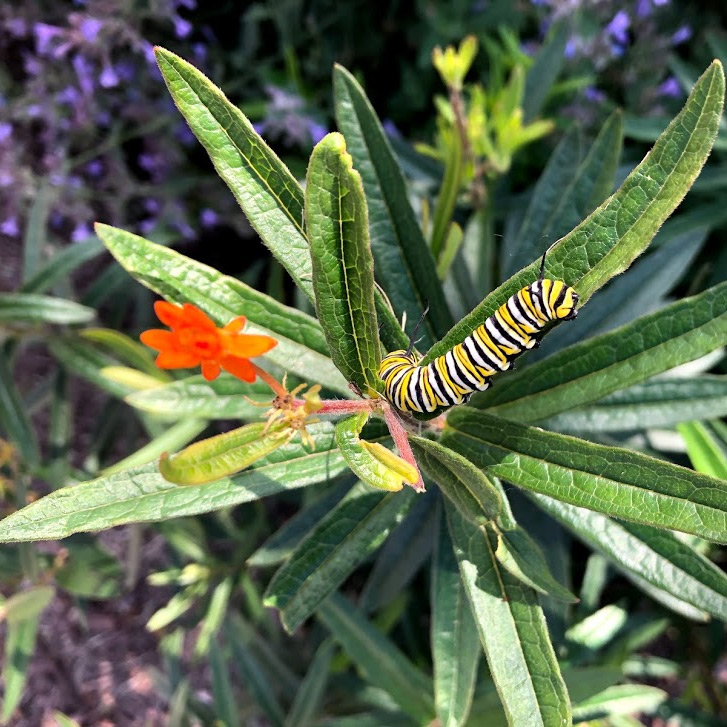
Host plants support pollinators throughout their life cycle as homes and as food. Some species need specific plants.  Monarch butterflies, for example, require Asclepias species for their survival as they are the only plants on which the caterpillars can feed. Other plants are beautiful and good nectar (food) sources. With a mixture of larval host plants and nectar sources you can attract pollinators throughout their life cycles.

Native and Non-Native Plants

While native plants are essential host and nectar plants, some non-native plants are good nectar sources. Limit the use of non-native species to 15% or less of your pollinator garden.  Also, it is more beneficial for the pollinators to use straight species as often as possible rather than hybrids that are often developed for commercial sale.

Generalist and Specialist Pollinators

Some pollinators are supported by many types of plants (“generalists”); some plants are the only source for specific pollinators (“specialists”). Plant for the specialists since their plants also serve generalists.

Don’t Forget the Annuals

Annual flowers need to be replanted every Spring. Perennials return year after year. Both have value to the pollinators. Some recommended annuals include zinnias, cosmos, and sunflowers. Pollinators also love annual herbs when they flower: Dill, Parsley, and Cilantro are common favorites.

More information on planting pollinator-friendly gardens

Step Three

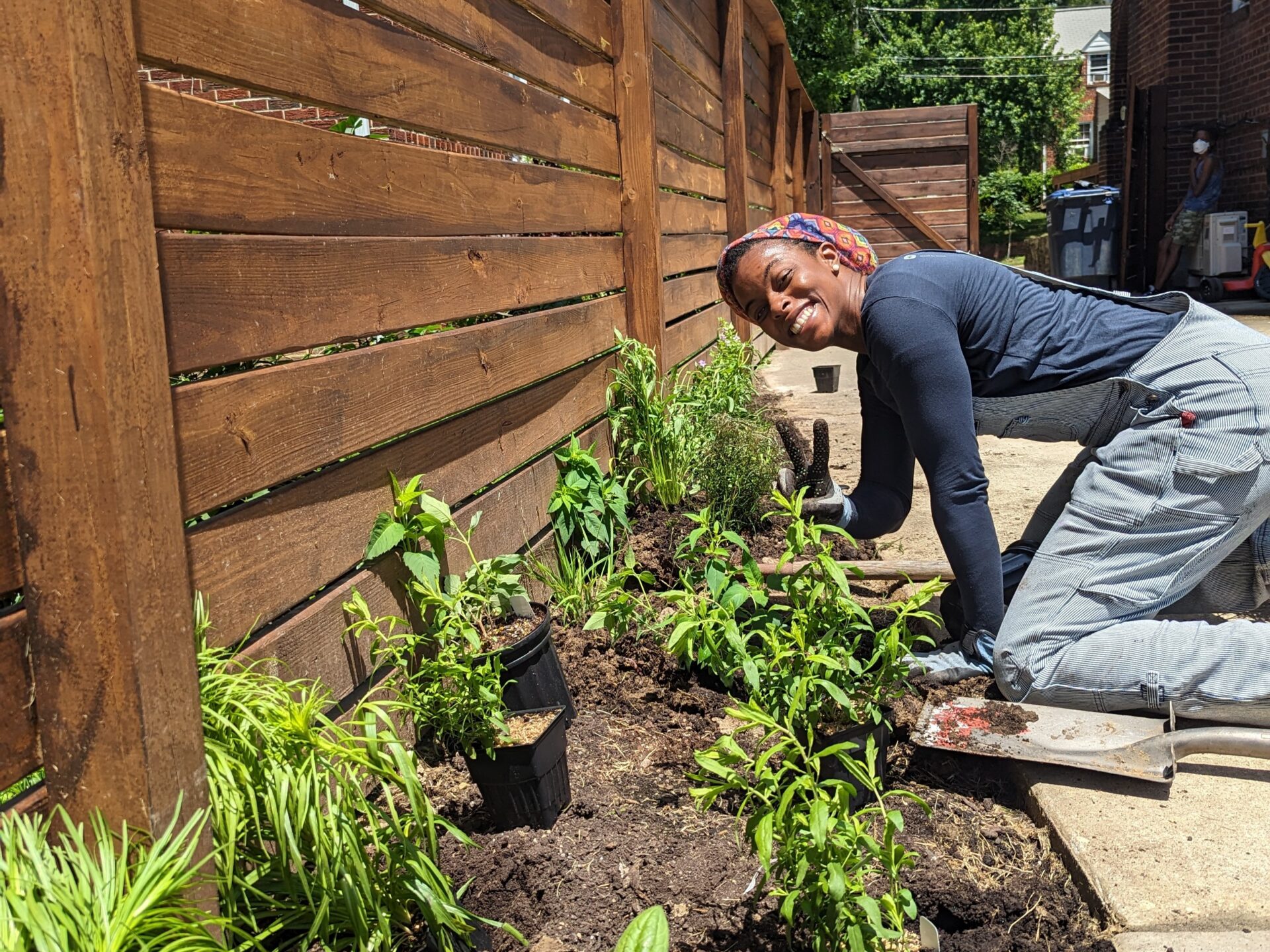
Dig in and start planting

Now comes the fun part!

Planting tips to help ensure success

Assemble

Find or invest in basic gardening tools like a shovel, trowel and gloves. Depending on your chosen garden location you will need: Raised bed materials (metal or wood), soil or compost, plants/seeds and mulch.

Prep

To convert an existing lawn or planting area, remove current grass or plantings and turn the soil to loosen it. Raised beds can be  constructed of metal or wood. Large pots or containers also work. All new gardens need 1-2″ of topsoil and/or compost mixed into old dirt.

Arrange

Cluster like plants together, about 18″ apart, in groups of 3 or 5. Pollinators appreciate the easy access of a mass of flowers. Clumps of color are also visually appealing to people.

Front to Back

Shorter plants go in front so they don’t block the view of the beauties behind them. Staggered height plants are also easier to tend!

Weed Block

Gardens built near invasive weeds may benefit from weed-block fabric. Common Mid Atlantic invaders are mugwort, nutsedge, bindweed, and crabgrass.

Soaker Hose

Inexpensive soaker hoses save water by efficiently getting to the base of the plant. Soaker hoses go under mulch. They are twirled around plants and pinned in place with cheap landscape staples.

Mulch

2-3″ of hardwood mulch atop the garden will suppress weeds, enrich soil and retain moisture.

Fencing

Wire or wood fencing can provide a visual and functional barrier in gardens where people walk and pets linger.

Step Four

Nurture and enjoy!

Create a space to relax and enjoy your beautiful plants and watch the pollinators come and go.

Be a good host and keep your pollinators happy!

Avoid Chemicals

Avoid herbicides and pesticides, including mosquito control services. Chemicals will harm pollinators and disrupt the balance of the ecosystem by killing predators that naturally get rid of pests. Chemicals tend to be overused and misused, with excess washing into storm drains and harming aquatic wildlife.

Offer Pollinators Water

Water sources, like a birdbath or a butterfly puddler, will attract pollinators and help them stay hydrated.

Keep your garden healthy and watch it thrive season after season

Summer Maintenance

Water every other day. To best judge if watering is needed, jab a stick into earth. If it does not go down approximately six inches, then you need to water! Weed. All the time.

Fall Maintenance

Be a lazy gardener; don’t clean up for winter. Bugs are pollinators that keep gardens healthy. They live in the rotting foliage and help break it down, adding nutrients back into the soil for next year’s growth.

Spring Cleaning

Take out all dead and dying plants and replace with new ones. Add approximately 1″ of leaf mulch or compost to the entire garden. Gently nestle hardwood mulch around your plants.

Step Five

Share your garden and add it to our pollinator map.

We can turn the District into a flourishing pollinator haven. Send your address and a photograph of your garden to info@dcnatives.org and we will add it to our DC Natives map.

Spread the buzz about DC Natives!

Tell your friends, family, and neighbors to follow us on social media, sign up for our newsletter, and/or talk up the importance of pollinators in DC.

Tips for Gardeners to Keep Mosquitos at Bay

At DC Natives, spring is the season that we tend to love most as all the native plants start to grow again, and the time comes to start putting most of our vegetable seeds and seedlings in the ground.  

While the return of mosquitoes each spring in the District might feel like the arrival of a nemesis, it’s important to remember their ecological value. These native insects serve as a crucial food source for creatures like native bats, and surprisingly, even contribute to pollination, playing a vital role in the lifecycle of plants, serving as a food source for the dragonflies among the water lilies at Kenilworth Aquatic Gardens. Recognizing their place in the food web doesn’t mean we have to endure their disease-carrying potential and irritating bites, which can persist well into the fall. Thankfully, there are earth-friendly strategies we can employ from late April into early November to gently reduce their presence around our homes and neighborhoods. 

The Lifecycle of a Mosquito 

To understand how to mitigate mosquitoes, you have to know their life cycle. Most mosquitos need fresh water that has stagnated in order to reproduce, which is why you find them thriving near ponds, puddles, in the base of planter pots, bird baths, or any other spot that has water that has been sitting for some time. Mosquitos are also most active in early morning and late evening. 

After mating, the female mosquito lays her eggs in the stagnant water. Soon after the mosquito larvae hatch from the eggs and eat microorganisms in the water in order to grow. Within two weeks the mosquitos change into non-feeding pupa. Then, in just a few days a fully grown adult mosquito emerges. The males feed on nectar from the garden, but the females feed on nectar but also blood in order to grow their eggs. 

Introducing the “Bucket of Doom” to Control Mosquitoes 

Many methods exist to help reduce or control mosquitoes. A key step in the process is to remove all standing water around your property. Turn empty plant saucers or containers over, freshen up the water in your bird bath regularly, and pour out any residual water that collects in these outdoor containers. Remember, any place that water has been sitting for a few days is a potential breeding ground for mosquitoes.  

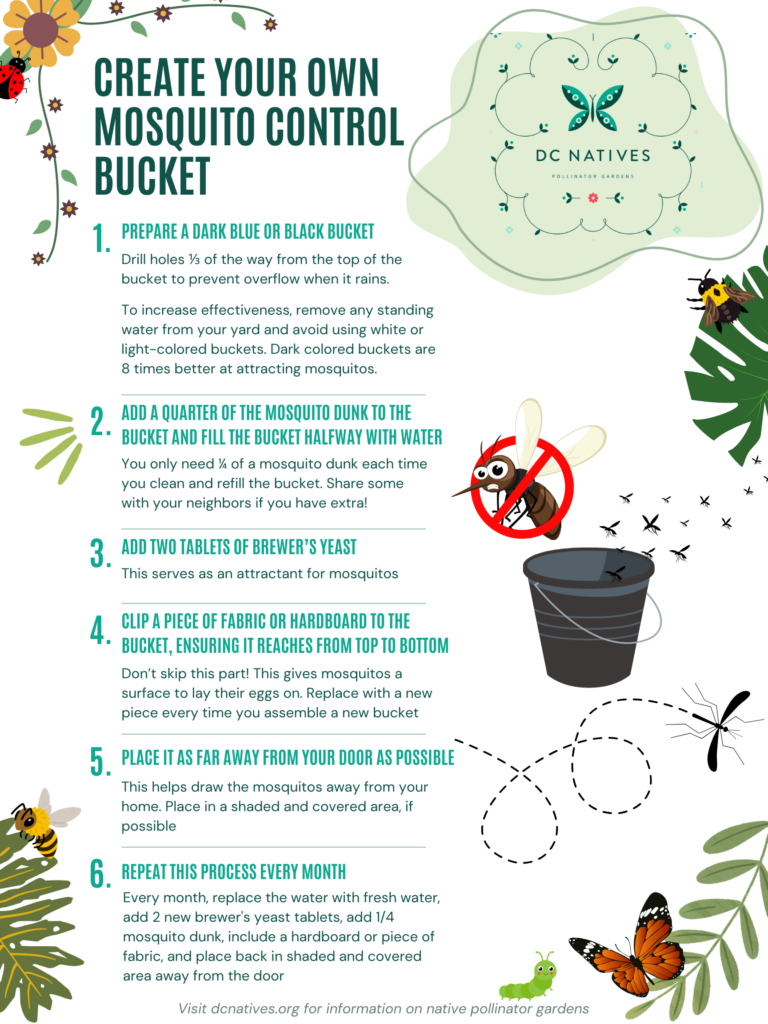
We’ve created a simple info sheet on a low-cost & effective way to control mosquitos on your property using the “Bucket of Doom.” Here is where you will need all readily available from your local hardware store or left over: 

  • A dark blue or black colored bucket 
  • Mosquito bits or dunks 
  • Brewer’s yeast 
  • A piece of fabric, hard board, or a piece of wood the length of the bucket 
  • Water

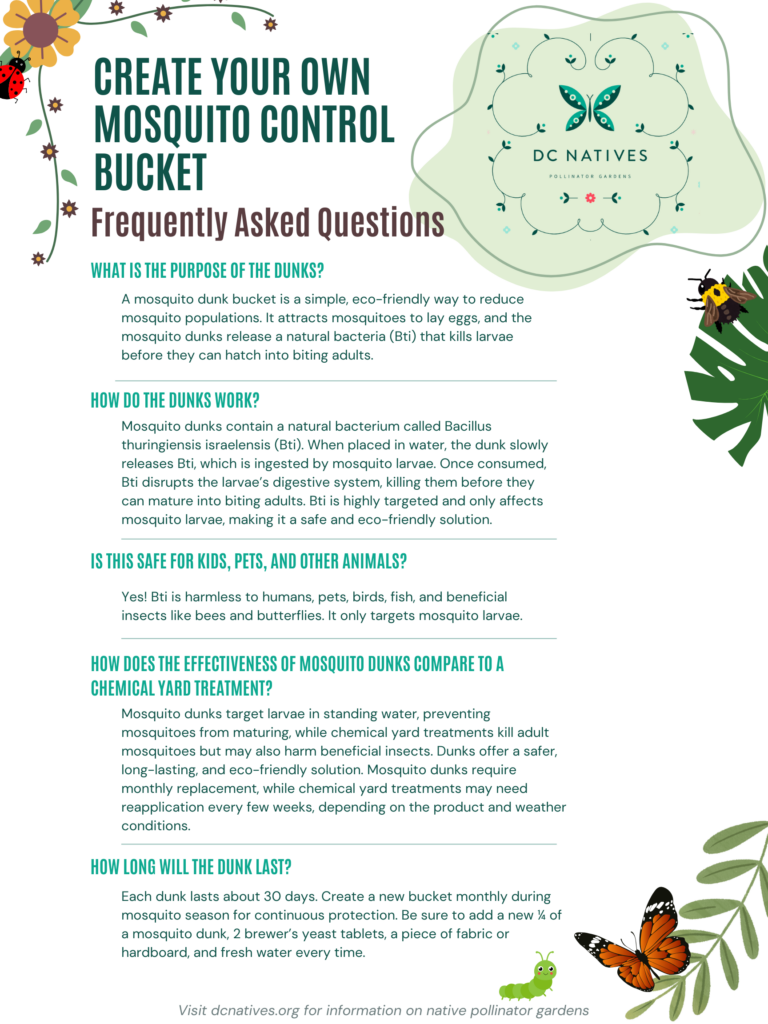
Frequently Asked Questions

Working with Mother Nature to Deter Mosquitoes

Be patient with the process as it may take time for you to notice a difference. For better results, enlist a few of your neighbors to install their own mosquito control buckets and to at least remove standing water on their property. Creating multiple buckets will significantly disrupt at the larval stage. While you will still see some adult females, their larvae will not survive the Bti bath, resulting in an overall decline. 

Beyond the “Bucket of Doom,” several other earth-friendly strategies can help manage mosquito populations. The most crucial step remains eliminating all standing water sources on your property. For larger water features like rain barrels, consider using the mosquito dunks. When outdoors, protect yourself with insect repellent. Additionally, you can encourage natural mosquito control by creating a habitat that attracts their predators. Observe Kenilworth Gardens, a local “swamp” that remarkably doesn’t suffer from mosquito pest issues due to the dragon flies and consider how to draw in wildlife that feeds on mosquitos, such as certain birds, dragonflies, bats, salamanders, lizards, frogs, and spiders. Supporting these natural predators is a sustainable way to utilize Mother Nature’s own methods for keeping mosquito numbers in check. 

If you have any questions, please message us on Instagram, Facebook, or by emailing dcnatives.org@gmail.com.

What to Expect from Your Budding Spring Pollinator Garden

Spring is not only in the air, it’s in the earth and your pollinators are now anxiously pushing through to bring sustenance and joy to all! For those of you who have had your pollinator gardens for a year or two, you may think you’re used to what’s to come, but you may find something unexpected brought to you by a neighboring hummingbird or bat from a few blocks away. For our newbie DC Natives awaiting your first bloom, you are likely excited by the unknown. However you identify, DC Natives is here to give you a few tips on what to expect from your budding spring pollinator gardens. Make sure you take photos and videos to capture your pollinators’ metamorphosis and their visiting friends. Email us and share your pics or tag us on Instagram and Facebook.

March: Worry not; you likely didn’t see much activity until this last week, but if you have bulbs or ephemerals, they may have popped up a bit earlier. Now is a good time to start “cleaning” the garden. If you put leaves in your bed, unbury them now. Pulling weeds and cutting stems is optional, but do identify and pull out any diseased plants. If you need help identifying a weed or diseased plant, send us an email or write us on Instagram, and we will get back to you. As a reminder, 60-70% of native bees burrow underground to lay eggs. Please try to leave the soil as undisturbed as possible and resist the urge to add mulch right away. 

April: Baptisia, yarrow, penstemon, geranium, coreopsis, and phlox will probably start flowering. Consider mulching with any leftover fall leaves. 

May: All of the above should be in bloom, but don’t worry if your echinacea is behind as they tend to be late bloomers. You will likely notice green shoots for summer bloomers like milkweed, liatris, monarda, and mountain mint.

While you wait: If you want to stay busy and set up a sustainable home for your pollinator visitors, consider providing a nesting site for solitary bees or an area for butterflies to take shelter during inclement weather. Want to learn more about that? Join us for First Flower Friday, our demonstration garden series.

Subscribe and receive gardening resources, environmental insights, and DC Natives news.

This field is for validation purposes and should be left unchanged.