Guerilla Gardening: How to create DC Natives Seed Bombs
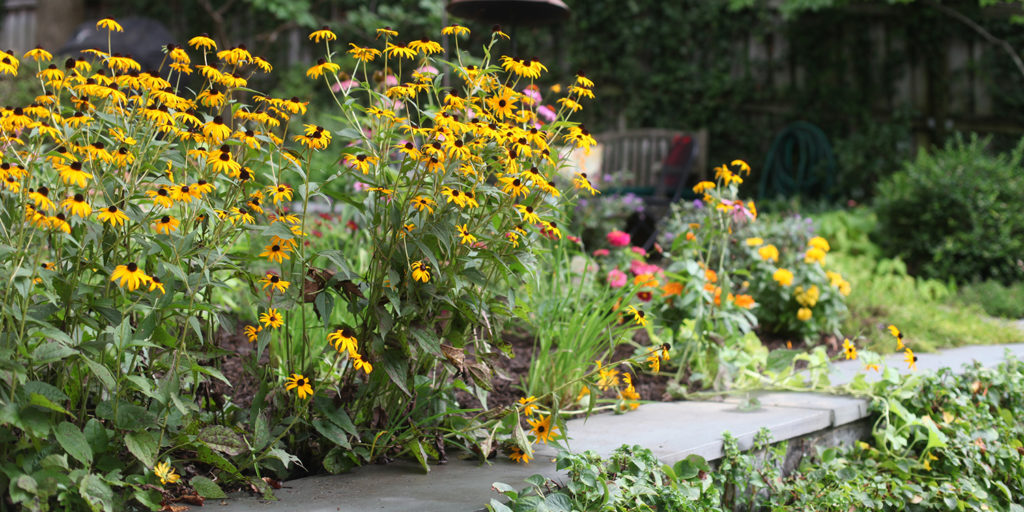
What are seed balls or seed bombs?
The terms seed ball and seed bombs are interchangeable. Seed bombs are balls made of clay, compost, shredded paper or other material that contains various kinds of native seeds. The balls are designed to break down over time so that the seeds on the outside and/or inside the ball contact the soil to hopefully allow a native plant habitat to grow and flourish. This easy, fun, kid-friendly craft activity helps to increase biodiversity and add beauty in uncommon and some common environments.
Why create seed bombs?
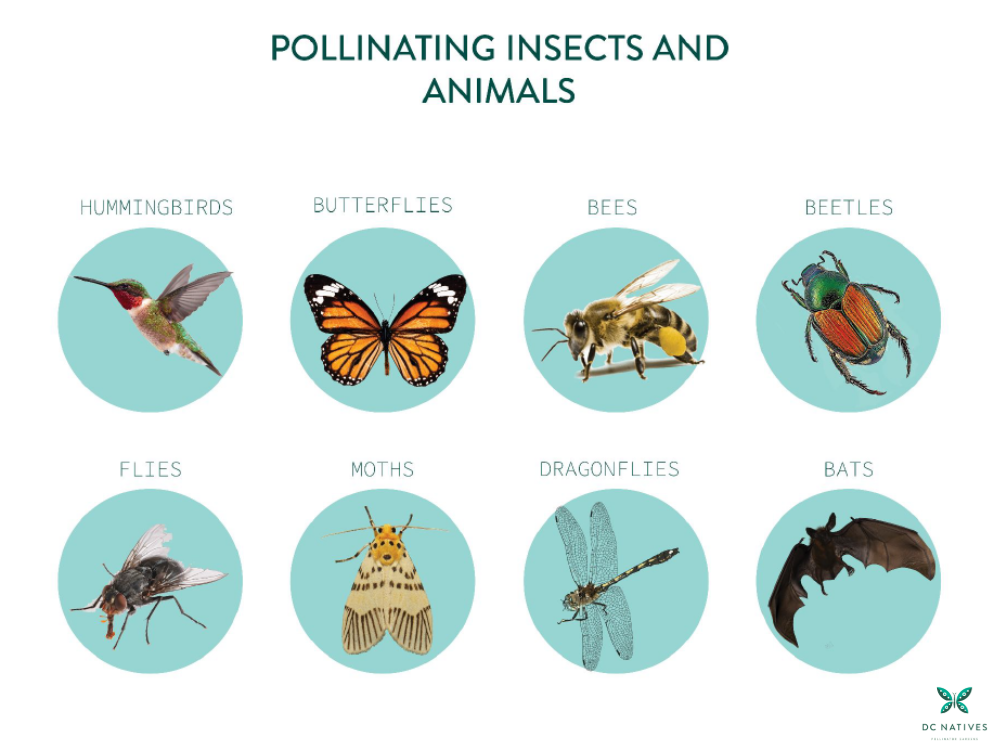
Seed bombs are an easy and accessible tool to add native plants to environments that may have degraded soil or areas overrun by invasive species. Making seed bombs is very inexpensive but has a priceless effect in our communities. This fun activity is also very easy to replicate in a classroom setting or with kids involved, so it helps to educate our youth on the benefits of conserving our pollinators. Seed bombs are also consider a form of urban guerrilla gardening. Seed bombs deliver seeds to key areas that, as the plants grow, eventually will help to provide food and habitat for bees, butterflies, moths, and so many other amazing pollinator species.
Cultural and Historical Context
According to an article on EpicGardening, the practice of creating seed balls started in Japan. Seed bombs are an ancient Japanese practice called Tsuchi Dango, meaning ‘Earth Dumpling’ (seed bombs are made from clay earth). The revolution act of making seed bombs was reintroduced in 1938 by a Japanese microbiologist/ farmer Masanobu Fukuoka (1913–2008).
How to make Seed Bombs?
There are multiple ways of creating seed bombs, and we’ve made this easy-to-follow recipe to make seed bombs.
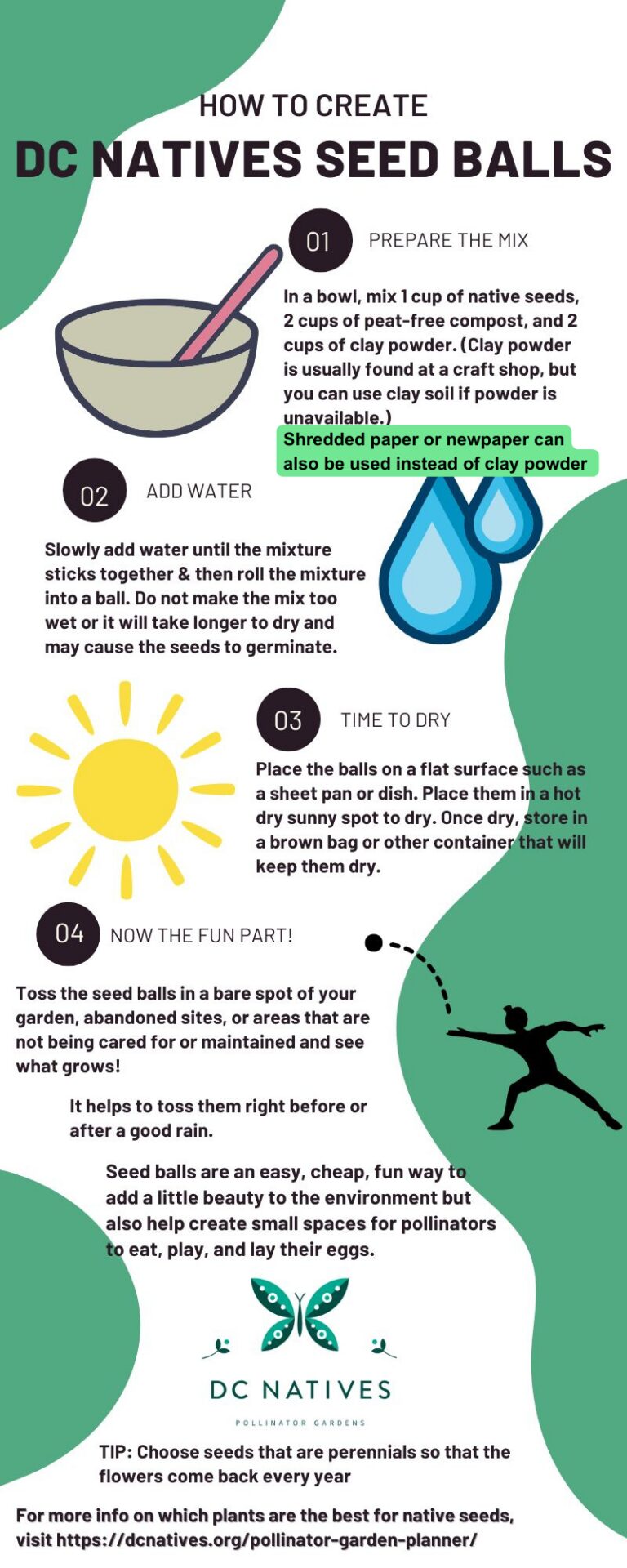
We hope you enjoy this activity and we appreciate your help “rewilding” the earth. If you loved making seed bombs, please share your photos/videos on Instagram, Facebook, or email us at dcnatives.org@gmail.com and tag DC Natives so we can share with our community the good work you are doing to help!
We have also included a video on the Resources playlist on the DC Natives YouTube channel!